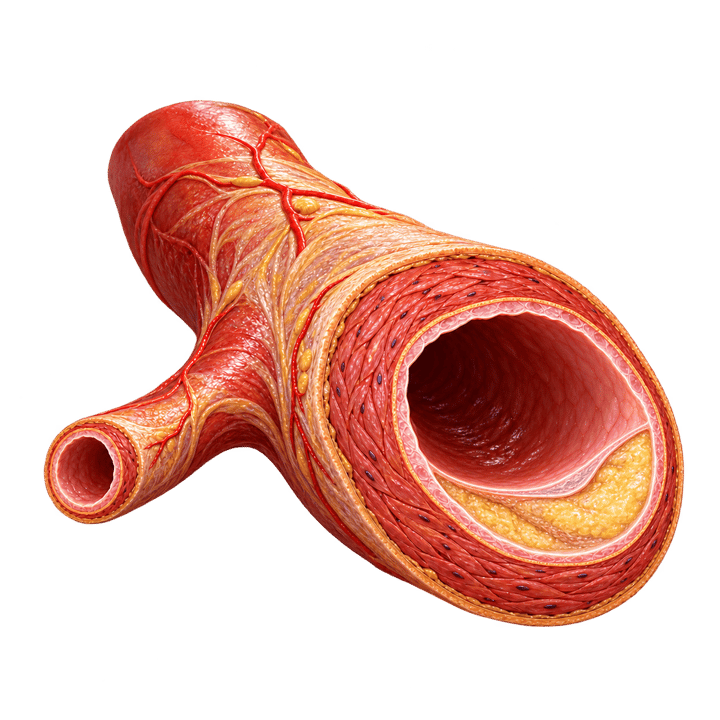
Cholesterol is LDL times years
On this page
- The map
- Why LDL times years?
- How high: your number against your goal
- How long: why the years before 40 count
- How it works, in one picture
- What lowers it, and by how much
- Triglycerides run on a faster clock
- When food isn’t the answer
- How to tell if it worked
- What changed in 2026
- Why are you here?
- Risk is never LDL alone
- The simple plan
- The numbers in one table
Plaque in your arteries builds from two things: how high your LDL is, and how many years it stays that high. Call it LDL times years. Get your LDL under the goal for your risk, get there early and keep it there, and almost everything else about cholesterol is detail.
This guide helps you understand your numbers, do what you can with food, movement and habits, and walk into your doctor’s office knowing your options. It isn’t medical advice, and it never tells you to start, stop or change a medicine.
Did you get your cholesterol back as a sheet with a total on top and a range printed beside each line? Most people get it that way, look at the total, check that each line sits inside its range, and move on. But the total isn’t the number with a goal, the range is the same for everyone who walks into that lab, and one result tells you little about the years behind it. The 2026 US guideline, published in March, looks at it the other way round, and so does everything on this site.
If you want to, and if you can, start the natural way. Your liver makes most of your cholesterol, and food, fiber, movement and weight change how fast it clears LDL, by an amount trials have measured (how to lower your cholesterol naturally). For some people that’s enough, and for others it’s the first half of the plan.
Plenty of people online say LDL doesn’t matter at all, and some of their points come from real studies. We take them seriously. Does LDL really matter? puts their best arguments next to the genes and the trials, step by step.
What we’d do
Skip past the total and find your LDL and your non-HDL. Ask your doctor which risk band you’re in, since your goal follows from it. Swap butter, fatty meat and cheese for olive or vegetable oils, and build up to about 10 g of psyllium a day. If your triglycerides are high, cut alcohol and sweet drinks first. Retest at the same lab 6 to 12 weeks later, and then keep it there, because the years count.
If your LDL is 190 or more, or a parent, brother or sister had a heart attack or stroke young, see a doctor before you plan a diet. If you take a statin, keep taking it, and bring any question about it to the person who prescribed it.
What to do with your numbers
- First, check for these
- LDL of 190 or more, or triglycerides of 500 or more: see a doctor before any food plan.
- Chest pain, pressure or sudden breathlessness: call 911.
- On a cholesterol medicine: keep taking it. Your prescriber sets your goal.
- Pregnant: cholesterol rises on purpose. Ask your midwife or doctor.
- Find your goal
Ask your doctor for your 10-year risk on PREVENT. It gives your LDL goal: under 100, 70 or 55 mg/dL, and non-HDL 130, 100 or 85. Until you know, hold yours against 100 and 130.
- Compare, and pick one path
- Under your goal. Keep your habits and test again at least every 5 years.
- Over by less than 30 points. Food can close a gap that size. Start the fat swap and 10 g of psyllium, then retest at the same lab in 6 to 12 weeks.
- Over by 30 or more, an LDL of 160 or more, or a parent or sibling with heart disease young. Have the medicine conversation with your doctor now, and do the food changes too.
- Triglycerides over 150 fasting or 175 after eating
Cut alcohol and sweet drinks first, walk most days, and retest in 4 weeks.
- Once in your life, and when numbers disagree
Get Lp(a) tested once. If your triglycerides run high or you have diabetes, ask for ApoB too, since it counts the particles directly (check yours on apob.guide).
This guide helps you understand your numbers and do what food and habits can. It never tells you to start, stop or change a medicine. That's for you and your doctor.
The map
- What the numbers on your panel mean. The two lines with goals, and which lines were calculated.
- What should my LDL be? Your goal comes from your risk, not from the lab’s range.
- Why LDL is a lifetime number. The genes and trials behind LDL times years.
- Where cholesterol comes from and where it goes. Your liver, its drain and the artery wall.
- What lowers LDL, ranked by size. Every change in mg/dL, and the plan the trials ran.
- Triglycerides and HDL. The faster numbers, and the four week plan.
- When it’s your genes. FH, Lp(a) and ApoB.
- How to test, and how to tell if it changed. Fasting, labs and the noise between two results.
- When medicine is the conversation to have. The lines where the guideline turns to it.
- What changed in the 2026 guideline. The goals came back, and five other things moved.
Go deeper:
- Does LDL really matter? The skeptics’ best case against the model, and the evidence for it.
- Can I manage it with lifestyle, or do I need medicine? Your gap against what food can do.
- Statins and other medicines: the case for and against. With the questions to take to your doctor.
- Every cholesterol and heart test. ApoB, Lp(a), a calcium scan and the rest, with costs.
- The story of cholesterol, in order. From rabbits in 1913 to the 2026 guideline.
- The 10 studies that shape our view. What each found, and its limits.
Why LDL times years?
In 2006 the geneticists Jonathan Cohen and Helen Hobbs and two colleagues went back through 15 years of records from ARIC, a large US heart study. Among 3,363 Black participants, 2.6% carried a broken copy of a gene called PCSK9. Their LDL was 28% lower than everyone else’s, and it had been lower since the day they were born. Over the 15 years they had 88% less coronary heart disease.
Now compare that with the statin trials. Across 26 of them and about 170,000 people, each 39 mg/dL of LDL taken off cut heart attacks, strokes and artery procedures by about a fifth, over about five years. A 2012 analysis of 312,321 people found that the same 39 points held lower from early life went with about 55% less coronary heart disease, three times what a statin started in middle age gave.
Cholesterol Treatment Trialists 2010, Ference 2012 and Cohen 2006. The statin trials counted heart attacks, strokes and artery procedures, and the gene studies counted coronary heart disease, so the pattern is solid and the exact gaps are rough.
The same drop bought far more when it had decades to work. In 2017 a panel of the European Atherosclerosis Society looked across more than 200 studies of over 2 million people and found that the effect of LDL grows with how long you’re exposed to it. Roger Blumenthal, who chaired the 2026 US guideline, put it next to blood pressure, where lower for longer also gives much more protection.
You can see the idea with plain arithmetic. Add up your LDL year by year from age 20. At a steady 130, you’ve piled up by 50 what someone at 100 piles up by 59, and someone at 160 gets there before 45.
The dashed line is what an LDL of 130 adds up to by 50: 3,900 LDL-years. At 160 you get there at about 44, and at 100 at about 59. It's arithmetic, the level times the years, and it isn't a risk score.
Nobody has found a total at which plaque suddenly appears, and the chart doesn’t claim one. It shows why a lower number buys you years, and why the earlier you lower it, the more years it buys. Your LDL over the years runs it on your own number, with one change from any age you pick, and why LDL is a lifetime number has the trials and the genes.
How high: your number against your goal
Your panel probably shows a total, LDL, HDL and triglycerides. The 2026 guideline sets goals for two numbers only: LDL, and non-HDL, which is your total minus your HDL. It sets no goal for the total at all, because the total counts your HDL too. A total of 220 can be mostly HDL or mostly LDL, and is 220 cholesterol bad? runs both.
Your goal depends on your risk of a heart attack or stroke, which your lab doesn’t know. Under 100 mg/dL (2.6 mmol/L) if your 10-year risk is borderline or intermediate, under 70 (1.8) if it’s high, and under 55 (1.4) after a heart attack or stroke. At low risk there’s no number goal, just healthy habits. Non-HDL goals sit 30 points higher.
The LDL on your report has its own surprise. On most panels nobody measured it. The lab worked it out from your other three numbers, often with a formula from 1972 that assumes a fifth of your triglycerides is cholesterol riding in other particles. In 1.35 million real panels, the middle half ran from about 1 in 4.5 to 1 in 6, so the formula slips when your triglycerides are high or your LDL is low. What the numbers on your panel mean and which LDL is right? show how much. Is my cholesterol bad? holds your own panel against your goal.
LDL cholesterol is also a stand-in. What gets into the artery wall is the particle, and every particle that can cause plaque carries one ApoB. LDL cholesterol weighs the cholesterol inside the LDL particles, non-HDL weighs it in all of them, and ApoB counts the particles themselves. Most of the time they agree. When they don’t, usually with high triglycerides or diabetes, ApoB is the better guide, and apob.guide covers that case.
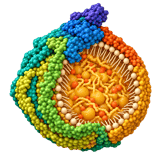 LDLmost of them
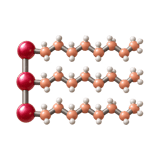 Remnantsleftovers of triglyceride particles
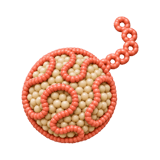 Lp(a)inherited, adds risk on top
- ApoB is the most direct count. When the numbers disagree, it's the better guide.
- Non-HDL is free on every panel (total minus HDL) and sits between the two.
- LDL-C is the cheap, rough proxy the goals were built on.
- Lp(a) is a separate particle set by your genes. Test it once.
- HDL isn't on the list. A low one is a warning sign, but raising it didn't help.
How long: why the years before 40 count
LDL and non-HDL climb an average of 1 to 2 mg/dL a year in young adulthood, the guideline says, and nobody feels it. High cholesterol has no symptoms, so the only way to know is a test. The guideline asks every adult to get one from age 19, and again at least every 5 years, and every child once between 9 and 11.
A 25 year old’s LDL of 160 doesn’t look urgent next to a 60 year old’s, but it has 40 more years to add up. Am I too young to worry about cholesterol? has the case for starting early, and what’s a normal cholesterol level for my age? has where Americans sit decade by decade.
Women get a turn of their own. In SWAN, a US study that followed 1,054 women through menopause with a check every year, total cholesterol, LDL and ApoB were the only heart risk factors that jumped in the year either side of the last period. Over 60, 16.4% of American women have a total of 240 or more, against 5.6% of men. Why does cholesterol go up after menopause?
How it works, in one picture
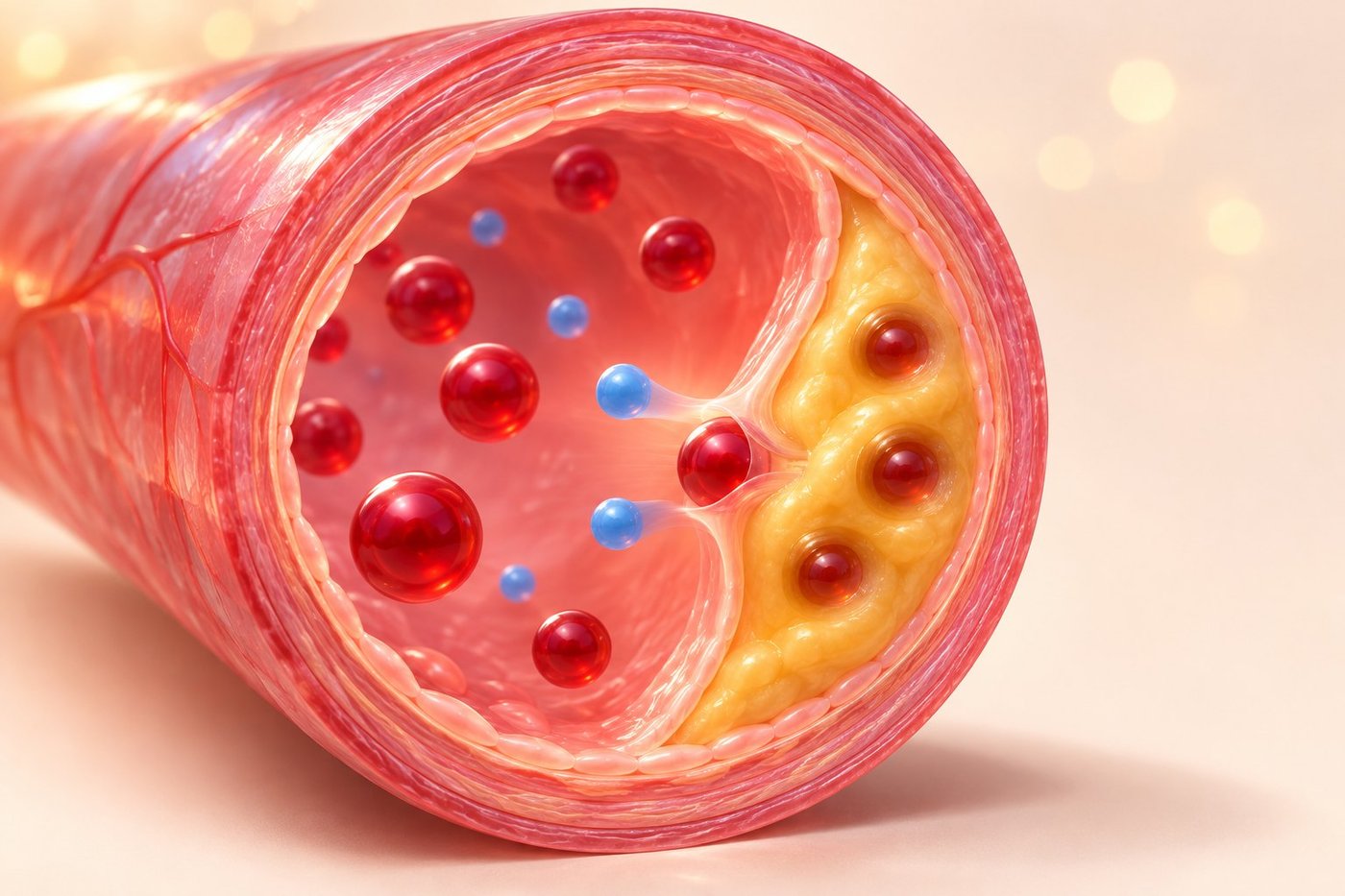
Picture your bloodstream as a sink with the tap on. Your body makes most of its own cholesterol, mostly in your liver, and sends it out in particles. The ones that carry most of it are LDL. Your liver also pulls LDL back out through receptors on its cells, which work like the drain. Your LDL number is how full the sink is.
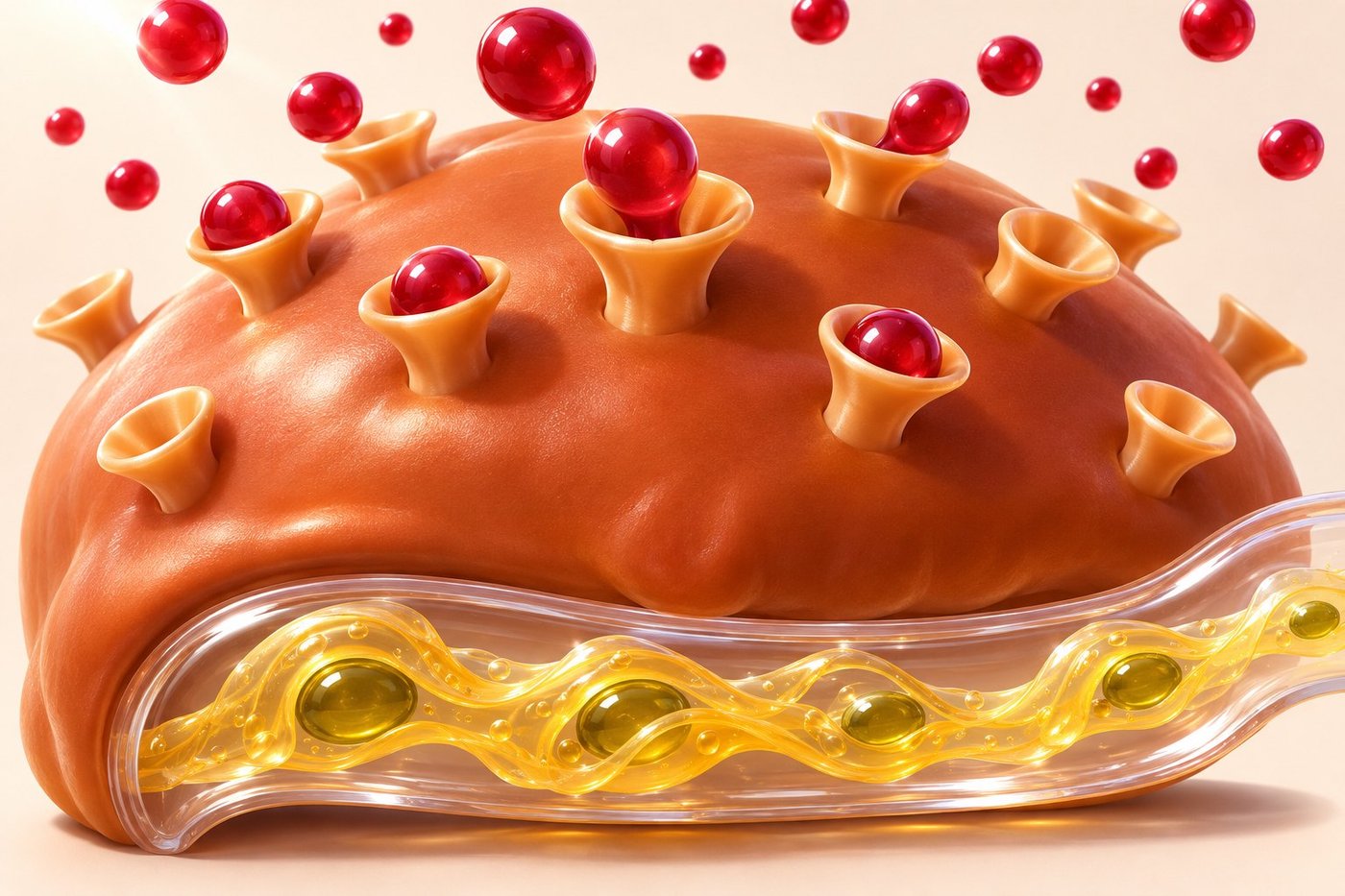
Three things set how wide the drain is. Your genes set most of it. People with familial hypercholesterolemia have half the normal receptors, or none, a discovery that won Michael Brown and Joseph Goldstein the 1985 Nobel Prize. Saturated fat slows it, which is partly why butter, fatty meat, cheese and coconut oil raise LDL. And fiber and statins open it wider, since both leave the liver short of cholesterol, so it puts out more receptors.
The damage happens downstream, in the artery wall.
-
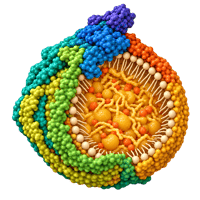 1Particles carry cholesterolYour liver sends cholesterol out in particles. Each one that can cause plaque carries one ApoB protein: mostly LDL, plus leftovers of triglyceride particles and Lp(a).
-
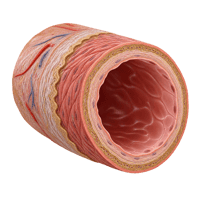 2Some cross into the artery wallParticles pass through the thin lining of the artery into the wall. The more there are in your blood, the more get in.
-
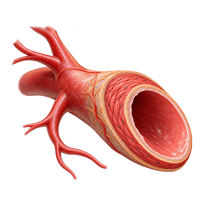 3Some get stuck thereParticles that bind to the wall stay behind. Researchers call this retention the key first step.
-
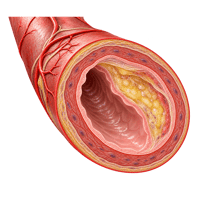 4They get damaged, and the immune system reactsTrapped particles are oxidized and swallowed by immune cells, which fill with fat and keep the area inflamed.
-
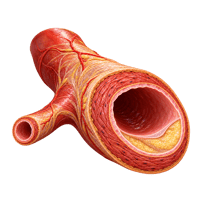 5Plaque growsDead cells, cholesterol and a fibrous cap build up over years. High blood pressure, smoking, high blood sugar and inflammation damage the wall and speed it up.
-
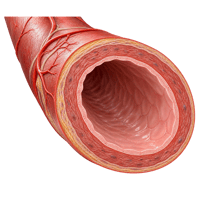 6Less exposure, and plaque can settleWhen LDL falls, fewer particles get in. Growth slows, and in trials that took LDL very low, plaque shrank a little.
From the European Atherosclerosis Society's consensus statements (2017 on cause, 2020 on mechanism), Tabas and colleagues (2007) on retention, and Libby and colleagues (2019) on the other risk factors.
This is why someone who eats well can still have a high LDL, and why eggs move it less than people think. Where cholesterol comes from and where it goes builds it out step by step.
What lowers it, and by how much
Food changes are smaller than most people hope, and big enough to count. Ten grams of psyllium a day took off about 13 mg/dL of LDL across 28 trials. Each 1% of your calories moved from saturated fat to vegetable oils took off about 2, in 69 feeding trials pooled for the World Health Organization, so a 5% swap is about 11. A month of the “portfolio” diet (soy, nuts, oats and a margarine with plant sterols added) lowered LDL 28.6%, against 30.9% for a starter statin in the same trial of 46 adults.
The changes overlap, so they never add up to the sum of the bars. A statin takes off a share of your LDL, so its bars grow with your number and the food bars mostly don't.
Pills sold as natural statins did nothing you could measure. In a 2023 trial, six best sellers, plant sterol capsules and red yeast rice among them, didn’t lower LDL more than a sugar pill over 28 days. A 5 mg statin took it down 35%.
If your gap to your goal is 30 or 40 points or more, food alone usually won’t close it, and that’s a conversation with your doctor. What lowers LDL, ranked by size has every change side by side, the LDL plan puts them in weeks, and what would lower yours? runs them on your own number. fats.guide goes further into saturated fat, and Higher or lower? tests how well you can spot it.
Triglycerides run on a faster clock
Triglycerides are a report on the last few weeks, and LDL on the last few years. They answer to drinks and sugar more than anything: two drinks a day raised them about 6 points across 42 studies, and higher sugar diets about 10 across 37 trials. Each pound you lose takes off about 1.8. They’re high from 150 fasting or 175 after a meal.
At 500 the worry moves from your arteries to your pancreas, and that means a doctor within days. How to lower triglycerides fast is a four week plan, and alcohol.guide helps with the drinks.
When food isn’t the answer
About 1 in 250 to 300 people has familial hypercholesterolemia, an inherited LDL problem, and as many as 9 in 10 of them don’t know. An LDL of 190 or more is the guideline’s line for looking: a doctor visit, whatever your risk, and a check of your family. Lp(a), another inherited particle, is a test every adult should get once, since food barely moves it. About 1 in 5 people have 125 nmol/L or more, which carries about 40% more risk. When it’s your genes covers both.
ApoB counts the particles that carry cholesterol instead of the cholesterol inside them, and it helps most when your triglycerides are high or you have diabetes. ApoB or LDL: which should I trust? has the short version, and apob.guide has the ApoB goals and a checker for your own number.
Medicine comes in at a few clear lines: heart disease, an LDL of 190 or more, diabetes from age 40, and a 10-year risk of 5% or more after a talk with your doctor. A moderate statin takes LDL down 30 to 49%, and a high-intensity one 50% or more. If you already take one, your prescriber sets your goal and decides any change. When medicine is the conversation to have has the lines and the questions to bring.
How to tell if it worked
Your numbers move from week to week with nothing changed, and every lab test adds a little error. For LDL a change has to reach about 19% before it’s probably real, and 29% before you can be sure. At an LDL of 130 that’s 24 and 37 points.
Test at the same lab, fasted or not the same way both times, since a normal meal moves triglycerides up to about 26 points and LDL about 8. Leave 4 weeks for triglycerides and 6 to 12 for LDL. How to test, and how to tell if it changed has the details, and did it really go down? stamps your own two results.
What changed in 2026
On March 13, 2026, the American College of Cardiology, the American Heart Association and nine other groups published a new US guideline, the first since 2018. It brought back number goals for LDL and non-HDL, where the 2018 guideline judged treatment by percentage cuts. It swapped the old risk calculator, which overestimated 10-year risk by 40 to 50%, for one called PREVENT. It asks every adult to test Lp(a) once, prefers newer LDL equations over the 1972 one, and recommends against supplements for cholesterol. What changed in the 2026 guideline has each change with the old rule beside it.
Why are you here?
People come to cholesterol for a lot of different reasons. A first high result, a doctor bringing up a statin, a jump after menopause, an LDL that shot up on keto, a parent who had a heart attack young. Pick yours.
-
 I want to lower it without medicineThe plan trials ran, every change sized in points
-
 My doctor brought up a statinThe case for and against, and questions to take back
-
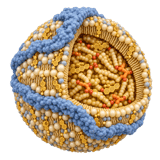 I've heard LDL doesn't matterThe skeptics, the genes and the trials, side by side
-

 My triglycerides came back highFour weeks, drinks and sugar first
-
 I just got my results backYour panel against the goal for your risk
-
 It went up around menopauseThe jump in the year around your last period
-
 I keep hearing about eggs and butterWhich foods move LDL, and which barely do
-
 It runs in my familyFH, the 190 line and the Lp(a) test you take once
-
 I'm losing weight, or on a GLP-1What weight loss does to each number
-

 My LDL shot up on ketoWhy it happens, and what to check
-
 Can I fix it without medicine?Your gap against what food can do
-
 Do I need a calcium scan?Who it helps, what it costs, what a zero means
-
 I eat well, so why is it high?Your liver makes most of it
-
 I'm young. Does it count yet?Why the years before 40 count the most
-
 It jumped since my last testNoise, a meal, or something real
-
 Is my number normal for my age?How common high cholesterol is at every age
-
 I heard the guidelines changedWhat the March 2026 guideline changed
- I've had a heart attack or a stentThe lowest goal, under 55
Risk is never LDL alone
Age is the biggest multiplier, since time turns LDL into plaque. High blood pressure, smoking, diabetes and insulin resistance, inflammation and kidney disease all damage the artery wall and speed it up, and a family history of early heart disease means you may start with more. In INTERHEART, a study of heart attacks in 52 countries, blood fats were the biggest single share of the risk, about half, and smoking, blood pressure, diabetes and belly fat made up much of the rest. Lowering LDL doesn’t fix any of those. bloodpressure.guide and lifespan.guide cover the others.
The simple plan
For anyone who wants healthy arteries, in plain steps.
- Start the natural way, if you want to and can. Swap butter, fatty meat and cheese for olive or vegetable oils, nuts and fish, and build up to 10 g of psyllium a day. Cut drinks and sweets if your triglycerides are high, move most days, don’t smoke and keep your blood pressure down. These help whatever your numbers say. How to lower your cholesterol naturally.
- Test, and know your goal. Get a lipid panel from age 19, at least every 5 years, and Lp(a) once. Ask your doctor for your 10-year risk on PREVENT and hold your LDL and non-HDL against the goal it gives. Check your panel, and see every test, and who needs it.
- Retest, and keep the results. Test again 6 to 12 weeks after a change, at the same lab and the same way, and judge it against the noise (did it really go down?). To retest at home, use the Gyroscope blood test both times. One kit covers total cholesterol, LDL, HDL, triglycerides, ApoB and ApoA1, you mail it back, and the results show up in the app within a week. It’s half price with Gyroscope One (US and Canada, not New York).
- Get help when the gap is big. If you’re 30 or more points over your goal, or on one of the guideline’s lines, have the medicine conversation with your doctor and keep the natural changes going. Can I manage it with lifestyle? comes first, then the case for and against medicine.
The numbers in one table
| The line | Why | |
|---|---|---|
| LDL goal | Under 100 mg/dL (2.6 mmol/L) at borderline or intermediate risk, under 70 (1.8) at high risk, under 55 (1.4) after a heart attack or stroke. No number goal at low risk | The 2026 US guideline |
| Non-HDL goal | 30 points above the LDL goal: under 130, 100 or 85 (3.4, 2.6 or 2.2) | It counts every particle that can clog an artery, and it still works when triglycerides are high |
| LDL of 190 or more | A doctor visit, whatever your risk | The guideline looks for an inherited cause there and recommends a statin |
| Triglycerides | High from 150 fasting or 175 after a meal (1.7 or 2.0). 500 (5.7) means a doctor within days, 1000 (11.3) the same week | The 500 and 1000 lines are about your pancreas |
| HDL | Under 40 (1.0) is low | It’s a warning sign. Pushing it up with drugs hasn’t prevented heart attacks |
| Testing | From age 19, at least every 5 years | The guideline’s screening line |
| Retesting after a change | 4 to 12 weeks, at the same lab, fasting or not the same way both times | A normal meal moves LDL about 8 points and triglycerides about 26 |
| A real change in LDL | About 19% for “probably real” and 29% for sure | Two results swing that much on their own (Did it really go down?) |
31 sources
- Sniderman AD, Thanassoulis G, Glavinovic T and others, Apolipoprotein B particles and cardiovascular disease: a narrative review, JAMA Cardiology, 2019pubmed.ncbi.nlm.nih.gov
- Borén J, Chapman MJ, Krauss RM, Packard CJ and others, Low-density lipoproteins cause atherosclerotic cardiovascular disease: pathophysiological, genetic, and therapeutic insights, European Atherosclerosis Society consensus statement, European Heart Journal, 2020pmc.ncbi.nlm.nih.gov
- Tabas I, Williams KJ, Borén J, Subendothelial lipoprotein retention as the initiating process in atherosclerosis, Circulation, 2007pubmed.ncbi.nlm.nih.gov
- Libby P, Buring JE, Badimon L and others, Atherosclerosis, Nature Reviews Disease Primers, 2019pubmed.ncbi.nlm.nih.gov
- Nicholls SJ and others, Effect of evolocumab on progression of coronary disease in statin-treated patients (GLAGOV), JAMA, 2016pubmed.ncbi.nlm.nih.gov
- Yusuf S and others, Effect of potentially modifiable risk factors associated with myocardial infarction in 52 countries (INTERHEART), Lancet, 2004pubmed.ncbi.nlm.nih.gov
- Blumenthal RS, Morris PB, Gaudino M and others, 2026 ACC/AHA guideline on the management of dyslipidemia, JACC and Circulation, 13 March 2026doi.org
- American College of Cardiology, ACC/AHA issue updated guideline for managing lipids, cholesterol, press release, 13 March 2026acc.org
- Labcorp, 2026 ACC/AHA dyslipidemia guideline updatelabcorp.com
- Grundy SM, Stone NJ and others, 2018 AHA/ACC guideline on the management of blood cholesterol, Circulation, 2019pmc.ncbi.nlm.nih.gov
- Cohen JC, Boerwinkle E, Mosley TH, Hobbs HH, Sequence variations in PCSK9, low LDL, and protection against coronary heart disease, NEJM, 2006pubmed.ncbi.nlm.nih.gov
- Cholesterol Treatment Trialists' Collaboration, Efficacy and safety of more intensive lowering of LDL cholesterol: a meta-analysis of data from 170,000 participants in 26 randomised trials, Lancet, 2010pubmed.ncbi.nlm.nih.gov
- Ference BA and others, Effect of long-term exposure to lower low-density lipoprotein cholesterol beginning early in life on the risk of coronary heart disease, JACC, 2012pubmed.ncbi.nlm.nih.gov
- Ference BA, Ginsberg HN, Graham I, Ray KK and others, Low-density lipoproteins cause atherosclerotic cardiovascular disease, a consensus statement from the European Atherosclerosis Society Consensus Panel, European Heart Journal, 2017pubmed.ncbi.nlm.nih.gov
- The Nobel Assembly at the Karolinska Institute, The Nobel Prize in Physiology or Medicine 1985, press releasenobelprize.org
- Fernandez ML, West KL, Mechanisms by which dietary fatty acids modulate plasma lipids, Journal of Nutrition, 2005pubmed.ncbi.nlm.nih.gov
- Everson GT, Daggy BP, McKinley C, Story JA, Effects of psyllium hydrophilic mucilloid on LDL-cholesterol and bile acid synthesis in hypercholesterolemic men, Journal of Lipid Research, 1992pubmed.ncbi.nlm.nih.gov
- Martin SS and others, Comparison of a novel method vs the Friedewald equation for estimating low-density lipoprotein cholesterol levels from the standard lipid profile, JAMA, 2013pubmed.ncbi.nlm.nih.gov
- Jovanovski E and others, Effect of psyllium fiber on LDL cholesterol and alternative lipid targets, American Journal of Clinical Nutrition, 2018pubmed.ncbi.nlm.nih.gov
- Ho HV and others, The effect of oat beta-glucan on LDL-cholesterol, non-HDL-cholesterol and apoB for CVD risk reduction, British Journal of Nutrition, 2016pubmed.ncbi.nlm.nih.gov
- Mensink RP, Effects of saturated fatty acids on serum lipids and lipoproteins, World Health Organization, 2016, as tabulated by Food Standards Australia New Zealandfoodstandards.gov.au
- Zomer E and others, Interventions that cause weight loss and the impact on cardiovascular risk factors, Obesity Reviews, 2016pubmed.ncbi.nlm.nih.gov
- Jenkins DJ and others, Effects of a dietary portfolio of cholesterol-lowering foods vs lovastatin on serum lipids and C-reactive protein, JAMA, 2003pubmed.ncbi.nlm.nih.gov
- Laffin LJ and others, Comparative effects of low-dose rosuvastatin, placebo, and dietary supplements on lipids and inflammatory biomarkers (SPORT), JACC, 2023pubmed.ncbi.nlm.nih.gov
- Rimm EB and others, Moderate alcohol intake and lower risk of coronary heart disease: meta-analysis of effects on lipids and haemostatic factors, BMJ, 1999pubmed.ncbi.nlm.nih.gov
- Te Morenga LA and others, Dietary sugars and cardiometabolic risk: systematic review and meta-analyses of randomized controlled trials, American Journal of Clinical Nutrition, 2014pubmed.ncbi.nlm.nih.gov
- Smith SJ, Cooper GR, Myers GL, Sampson EJ, Biological variability in concentrations of serum lipids, Clinical Chemistry, 1993pubmed.ncbi.nlm.nih.gov
- CDC Clinical Standardization Programs, certification criteria for cholesterol test manufacturerscdc.gov
- Langsted A, Freiberg JJ, Nordestgaard BG, Fasting and nonfasting lipid levels, Circulation, 2008pubmed.ncbi.nlm.nih.gov
- CDC NCHS Data Brief 515, Total and high-density lipoprotein cholesterol in adults: United States, August 2021 to August 2023cdc.gov
- Matthews KA and others, Are changes in cardiovascular disease risk factors in midlife women due to chronological aging or to the menopausal transition? (SWAN), JACC, 2009pubmed.ncbi.nlm.nih.gov