
Cholesterol only matters when you're older
Short answerNo
On this page
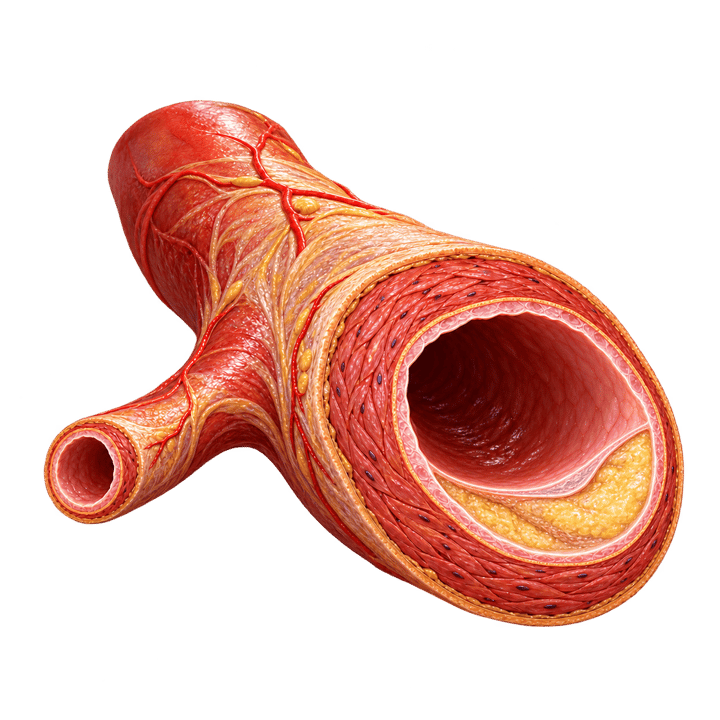
No. Plaque builds with how high your LDL is and for how many years, starting in your teens. LDL creeps up 1 to 2 points a year through your 20s and 30s, and people born with modestly lower LDL had 88% less heart disease. The 2026 US guideline asks every adult to test from age 19.
What we’d do
Get a panel in your 20s if you’ve never had one, and then at least every 5 years. If your LDL is high, start the food changes now, while they have decades to pay off. And if it’s 160 or more at any age, or a parent had heart disease young, talk to a doctor even though your 10-year risk looks tiny.
If you remember three things
- Plaque starts young. Autopsies of young people who died, mostly in accidents, found it in their heart arteries.
- The years add up. A modest drop held from early life protected people three times more per point than statins started later.
- Test from 19. At least every 5 years, and children once at 9 to 11.
Why people believe it
Heart attacks happen mostly in older people, so cholesterol feels like a problem for later. Risk scores agree, since a healthy 32 year old with an LDL of 150 comes out at a very low 10-year risk. The 2026 guideline notes that many adults, young ones most of all, don’t know their cholesterol and aren’t treated.
A 10-year score only looks 10 years ahead. It can’t see what 30 or 40 years of a high LDL will do.
Like sunburns and your skin
Every sunburn in your 20s adds to the damage your skin shows at 60, even if you can’t see any of it at 25. Plaque works much the same way. Particles get stuck in your artery walls a few at a time, every year your LDL is high, and the pile builds out of sight until it’s big enough to cause trouble.
What the evidence says
Plaque in young arteries
The Bogalusa Heart Study, autopsies of 204 people aged 2 to 39 who died mostly in accidents, NEJM 1998
Fatty streaks and early plaques in the heart arteries grew with age. Young people with higher LDL, blood pressure and weight, measured years before, had more of them.
Risk factor data was available for 93 of the 204.
A lifetime of lower LDL
The ARIC study, 15 years, Cohen and colleagues, NEJM 2006
Black participants born with a broken copy of the PCSK9 gene had 28% lower LDL all their lives, and 88% less coronary heart disease.
2.6% of 3,363 people carried the change, so the group was small.
Years against dose
312,321 people across nine gene studies, Ference and colleagues, JACC 2012
Each 39 mg/dL (1 mmol/L) of LDL that genes kept lower from early life went with 54.5% less coronary heart disease, three times the benefit per point of a statin started later in life.
Gene studies show what a lifetime of lower LDL does. They can’t say what lowering it at 25 would do.
What happens to LDL in your 20s and 30s
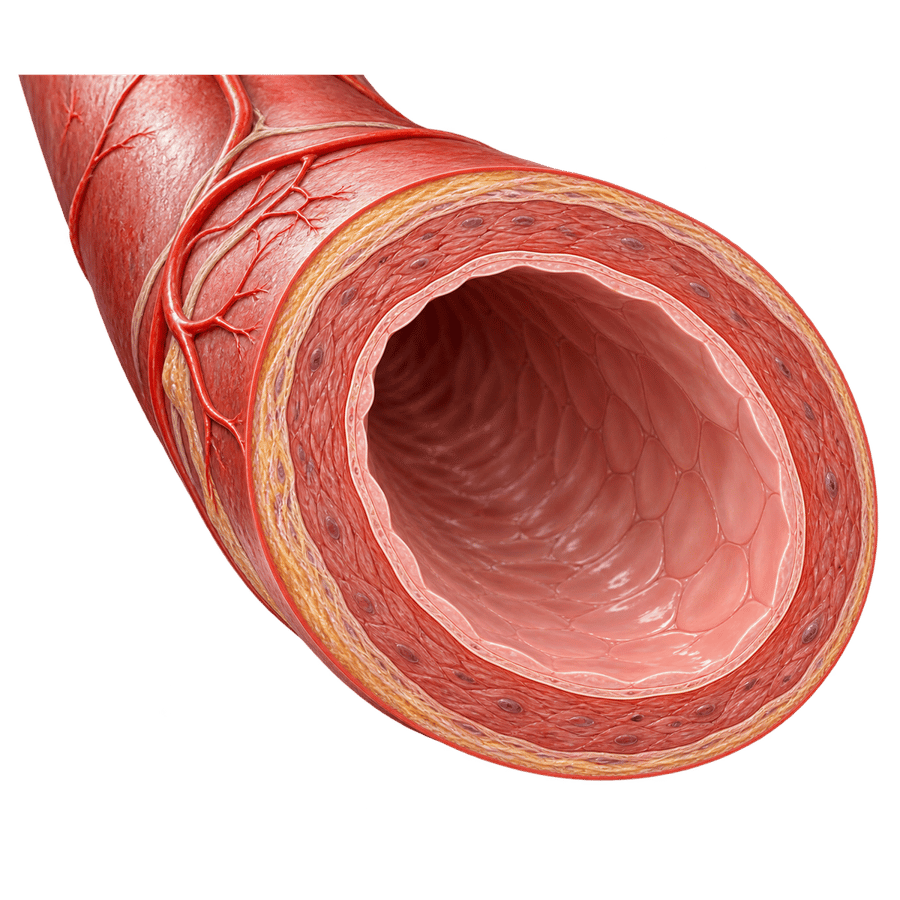
The 2026 guideline says LDL and non-HDL rise an average of 1 to 2 mg/dL a year in young adulthood, and that this normal rise “should not be perceived as optimal”. It points to the CARDIA study, where LDL levels in young adults about 20 points lower than those seen in middle age were already linked to heart risk later, so it asks doctors to talk about habits with young adults even at numbers that would look fine at 50.
In US adults tested from 2021 to 2023, 6.0% of those aged 20 to 39 already had a total cholesterol of 240 or more. The guideline also says about 20% of teenagers have abnormal cholesterol, and about 1 in 250 US children has FH, the inherited form, where cholesterol runs two to three times normal from birth.
When to test, and what to do
| Age | What the guideline says |
|---|---|
| 2 and up | Test once if a parent, brother or sister has FH or had heart disease young |
| 9 to 11 | Test once |
| 19 and up | Test at least every 5 years, more often with risk factors |
| 30 to 59, low 10-year risk, LDL 160 to 189 | A moderate statin is reasonable, to cut the years of exposure |
| Any age, LDL 190 or more | See a doctor. That’s where the guideline looks for FH |
If your LDL is high but under 160, the food changes are where to start (how to lower your cholesterol naturally). They cost little, and at 25 they have 40 years to work.
The best case against
“Nobody has run a trial of treating 25 year olds and waiting 40 years for heart attacks.” That’s true, and the guideline says no trial has shown the benefits or harms of screening young adults. Its case for testing at 19 rests on three things together: the causal link between LDL and heart disease, treatments that work and help more the younger you start, and a test that’s cheap and widely accepted. The gene studies and the Bogalusa autopsies fill in the rest of the picture (why LDL is a lifetime number).
6 sources
- Blumenthal RS, Morris PB, Gaudino M and others, 2026 ACC/AHA guideline on the management of dyslipidemia, JACC and Circulation, 2026doi.org
- Berenson GS and others, Association between multiple cardiovascular risk factors and atherosclerosis in children and young adults (the Bogalusa Heart Study), NEJM, 1998pubmed.ncbi.nlm.nih.gov
- Cohen JC, Boerwinkle E, Mosley TH, Hobbs HH, Sequence variations in PCSK9, low LDL, and protection against coronary heart disease, NEJM, 2006pubmed.ncbi.nlm.nih.gov
- Ference BA and others, Effect of long-term exposure to lower low-density lipoprotein cholesterol beginning early in life on the risk of coronary heart disease, JACC, 2012pubmed.ncbi.nlm.nih.gov
- CDC NCHS Data Brief 515, Total and high-density lipoprotein cholesterol in adults: United States, August 2021 to August 2023cdc.gov
- The Nobel Assembly at the Karolinska Institute, The Nobel Prize in Physiology or Medicine 1985, press releasenobelprize.org