Does LDL really matter?
On this page
Yes. The particles that carry LDL get into your artery walls and build plaque, and lowering LDL the ways outcome trials tested cuts heart attacks. But a number linked to risk isn’t automatically the cause, how you lower it matters, and LDL is never the whole story. This page puts the best case against LDL next to the case for it, one step of the model at a time.
What we’d do
Treat LDL, or better ApoB, as a real cause you can do something about. Lower it with the routes that cut heart attacks in trials: saturated fat swapped for unsaturated fats and more fiber on the food side, and if your doctor recommends one, a statin, ezetimibe, a PCSK9 drug or bempedoic acid. Then work on what sits underneath, since lowering LDL doesn’t fix smoking, blood pressure, blood sugar or your waist.
Why so many people say it doesn’t matter
Search “does LDL matter” and you’ll find doctors, podcasters and best-selling books saying no. Some of their points come from real studies. Big population studies didn’t link saturated fat to heart disease. Two diet trials from the 1960s, dug out of archives decades later, lowered cholesterol and didn’t save lives. In older people, a high LDL often goes with living longer. Drugs that improved cholesterol numbers failed, and one killed people. And some lean people on keto have very high LDL and say they feel great.
Each of those is true as far as it goes. The way to judge them is to hold them against the model of what LDL actually does, and see which step each one hits.
What LDL actually does
-
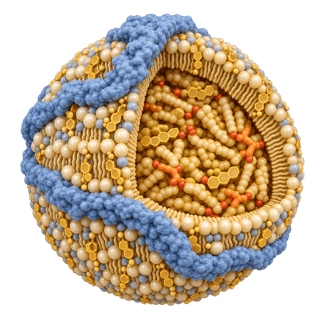
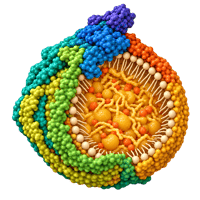 1Particles carry cholesterolYour liver sends cholesterol out in particles. Each one that can cause plaque carries one ApoB protein: mostly LDL, plus leftovers of triglyceride particles and Lp(a).
-
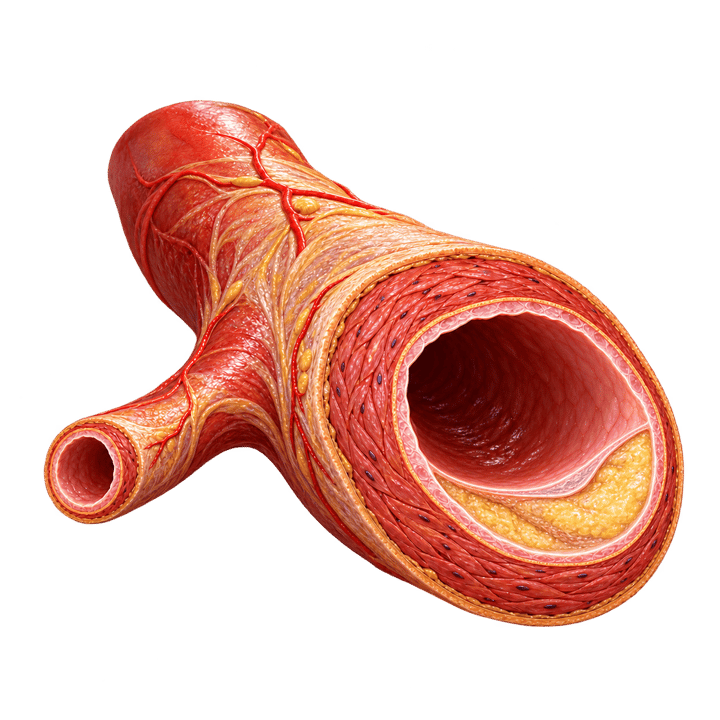
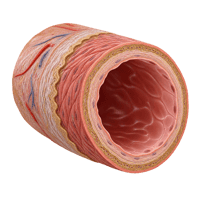 2Some cross into the artery wallParticles pass through the thin lining of the artery into the wall. The more there are in your blood, the more get in.
-
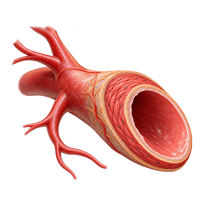 3Some get stuck thereParticles that bind to the wall stay behind. Researchers call this retention the key first step.
-
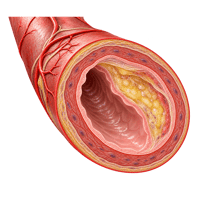 4They get damaged, and the immune system reactsTrapped particles are oxidized and swallowed by immune cells, which fill with fat and keep the area inflamed.
-
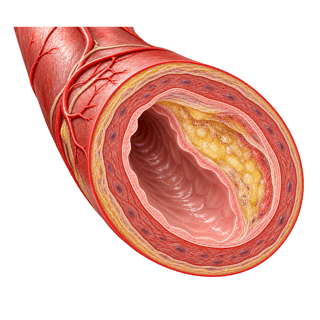
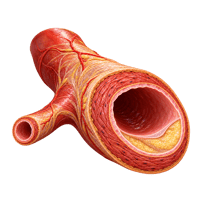 5Plaque growsDead cells, cholesterol and a fibrous cap build up over years. High blood pressure, smoking, high blood sugar and inflammation damage the wall and speed it up.
-
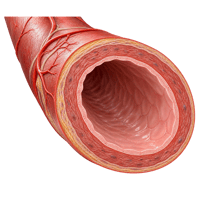 6Less exposure, and plaque can settleWhen LDL falls, fewer particles get in. Growth slows, and in trials that took LDL very low, plaque shrank a little.
From the European Atherosclerosis Society's consensus statements (2017 on cause, 2020 on mechanism), Tabas and colleagues (2007) on retention, and Libby and colleagues (2019) on the other risk factors.
The dose is how many of these particles you have, times how many years you have them. In 2020 the European Atherosclerosis Society laid out the mechanism, from particles crossing into the wall to the immune cells that fill with fat, and called the cumulative burden of LDL the central driver. The same reviews name what speeds it up, from high blood pressure, smoking and diabetes to a growing role for inflammation.
Which number counts
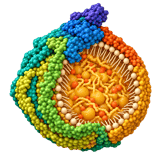 LDLmost of them
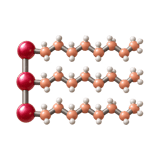 Remnantsleftovers of triglyceride particles
 Lp(a)inherited, adds risk on top
- ApoB is the most direct count. When the numbers disagree, it's the better guide.
- Non-HDL is free on every panel (total minus HDL) and sits between the two.
- LDL-C is the cheap, rough proxy the goals were built on.
- Lp(a) is a separate particle set by your genes. Test it once.
- HDL isn't on the list. A low one is a warning sign, but raising it didn't help.
Cholesterol can only get into the artery wall inside an ApoB particle, so the count of particles is what counts. In a 2019 genetic study of 654,783 people, genes that lowered triglycerides and genes that lowered LDL cut heart disease by the same amount for each 10 mg/dL less ApoB. Once ApoB was taken into account, LDL and triglycerides added nothing. The 2026 guideline says ApoB predicts risk better than LDL when the two disagree, which happens most with high triglycerides, diabetes or a very low LDL.
LDL cholesterol is still a good guide for most people, and it’s what the goals and most trials were built on. apob.guide covers what to do when they disagree, with the four corners and a checker for your own ApoB.
The case against, at its strongest
“Saturated fat isn’t linked to heart disease”
A 2010 analysis pooled studies that followed 347,747 people for 5 to 23 years. People who ate the most saturated fat had no more heart disease or stroke than people who ate the least. The authors, including Ronald Krauss, wrote that the answer might depend on what replaced the saturated fat.
That’s the step it misses. A study like this compares people who ate more saturated fat with people who ate more of something else, often white bread and sugar. In a large US study that followed people for 24 to 30 years, swapping 5% of calories from saturated fat to polyunsaturated fat went with 25% less heart disease, and swapping it for refined starch and sugar went with no benefit at all. In trials, where people were randomly assigned to eat less saturated fat, the Cochrane review of 15 trials and about 59,000 people found 21% fewer heart attacks, strokes and other heart events combined, and bigger drops in cholesterol gave bigger drops in events. It found little or no effect on deaths. Does saturated fat matter? goes through it.
“The diet trials lowered cholesterol and people died anyway”
The Minnesota Coronary Experiment ran from 1968 to 1973 in a nursing home and six state mental hospitals, with 9,423 people. Half got corn oil and corn oil margarine in place of animal fats. Their cholesterol fell 13.8%, and deaths didn’t fall at all. Much of the data went unpublished until Christopher Ramsden and colleagues recovered it in 2016. In the Sydney Diet Heart Study, 458 men who’d had a heart attack swapped animal fat for safflower oil and margarine, and 17.6% died against 11.8% of the men left on their usual diet.
These are real results, and they’re why we don’t tell anyone that a corn oil margarine saves lives. They fit the model’s warning that how you lower LDL matters, since both trials swapped in one kind of fat, linoleic acid, mostly as the margarines of the 1960s. They’re short on the time step too. In Minnesota, only 2,355 of the 9,423 people stayed on the diets for a year or more. They weaken one piece of old diet advice. They don’t touch the genetic and drug evidence below, which shows that fewer LDL particles for longer means fewer heart attacks.
“Older people with high LDL live longer”
In a 2016 review of 19 studies of 68,094 people over 60, those with higher LDL usually lived as long or longer. The authors, Uffe Ravnskov and colleagues, called it a reason to doubt the whole idea.
A study that follows people can’t tell which came first, and being ill or frail can change many numbers late in life. Trials can tell, because they assign the treatment at random. Across 28 statin trials and 186,854 people, each 39 mg/dL taken off LDL cut heart attacks, strokes and artery procedures by about a fifth, and the benefit showed up in every age group, including people over 75. In August 2026 the STAREE trial gave 9,971 people aged 70 and over in Australia, none with heart disease, atorvastatin or a placebo, and major heart events fell from 8.3% to 6.0%. It didn’t help them stay alive and free of dementia and disability, though, which is still an open question.
“Drugs that improved cholesterol didn’t help”
Torcetrapib raised HDL 72% and lowered LDL 25%, and heart events went up 25% and deaths 58%. It also raised blood pressure by 5.4 points and changed the body’s salt balance. Dalcetrapib raised HDL by about a third, left LDL flat, and did nothing. Niacin did nothing on top of a statin in AIM-HIGH, and in HPS2-THRIVE, with 25,673 people, it lowered LDL about 10 points and made no significant difference, while causing more trouble with diabetes.
These fit the model once you sort them. Raising HDL did nothing, because HDL was never the cause. A small LDL drop gives a small benefit at best. And a drug with harmful side effects can hurt you whatever it does to LDL. A 2016 analysis of 49 trials found statins, diet, ezetimibe and other treatments that work through the liver’s LDL drain all cut events by about the same 23% for each 39 mg/dL. When anacetrapib, another drug in the same class as torcetrapib, lowered non-HDL by 17 mg/dL in 30,449 people, coronary events fell 9%.
“On keto, high LDL is harmless if you’re lean and healthy”
A 2022 survey of people on low-carb diets found that the leanest, with low triglycerides and high HDL, often had the biggest LDL rises. The authors named a “lean mass hyper-responder” group: LDL of 200 or more, HDL of 80 or more and triglycerides of 70 or less. A follow-up, KETO-CTA, scanned 100 such people a year apart and reported that their ApoB didn’t predict plaque growth. In March 2026 the journal retracted it, saying its errors were too great to correct.
The model has no exception for diet, since an ApoB particle doesn’t know what you ate, and a year is short for plaque. If your LDL is high on keto, check ApoB and talk to your doctor about a coronary calcium scan. High LDL on keto: should I worry?
“It’s inflammation, not cholesterol”
In CANTOS, canakinumab, an anti-inflammatory drug, cut heart events by about 15% at its middle dose without changing cholesterol at all. That’s real support for inflammation as a cause. It fits step four of the model, where the immune system reacts to trapped particles. It adds to LDL and doesn’t replace it. Results since have been mixed. Colchicine won approval in 2023 and then failed after heart attacks in a larger trial, and in July 2026 ziltivekimab lowered inflammation markers in the ZEUS trial without cutting events.
The case for, at its strongest
Genes. People born with gene variants that lower LDL have less heart disease, in proportion to how much lower and for how long. In 312,321 people, each 39 mg/dL lower from early life went with about 55% less coronary heart disease. Variants in the gene statins target and the gene PCSK9 drugs target protected by the same amount per point of LDL. Genes that raise HDL didn’t protect anyone, which is the test HDL failed and LDL passed.
Families. In 2003, French researchers found PCSK9 mutations that cause very high cholesterol. In 2006, Jonathan Cohen and Helen Hobbs found the mirror image, broken copies of the same gene in people with 28% lower LDL and 88% less heart disease over 15 years. People with familial hypercholesterolemia, born with high LDL, get heart disease 2 to 4 times as often, and early.
Trials, by different routes. In 4S in 1994, simvastatin cut deaths from 12% to 8% in 4,444 people with heart disease. Across 26 statin trials, each 39 mg/dL cut major events by about a fifth. Then came drugs that work differently. Ezetimibe, which blocks cholesterol in the gut, took LDL from 70 to 54 on top of a statin in IMPROVE-IT and cut events by 2 percentage points over 7 years. Evolocumab, a PCSK9 drug, took LDL from 92 to 30 in FOURIER and cut the main events 15%. Bempedoic acid cut LDL 21% in people who couldn’t take statins and cut events 13%. Different routes, the same LDL drop, about the same benefit.
Plaque shrinks. In GLAGOV, 968 people with heart disease got evolocumab or a placebo on top of a statin. LDL averaged 37 against 93, and plaque shrank slightly on evolocumab while it grew slightly on placebo.
The consensus. In 2017 the European Atherosclerosis Society reviewed more than 200 studies covering over 2 million people, 20 million person-years and 150,000 heart events, and concluded that LDL causes atherosclerosis.
Linked to risk isn’t the same as the cause
HDL is the warning. In big population studies, a higher HDL goes with fewer heart attacks, about 38% lower odds for each standard step up. But genes that raise HDL didn’t lower heart attacks, and neither did drugs that raised it. HDL turned out to be a sign of a healthy metabolism, not the thing protecting you (the HDL myth). LDL passed the two tests HDL failed. Genes that lower it protect, and trials that lower it through different routes cut events in proportion.
How you lower it still matters. A route counts once an outcome trial shows fewer heart attacks, and the list so far is statins, ezetimibe, PCSK9 antibodies, bempedoic acid and swapping saturated fat for unsaturated fats. A drug or a diet can do other things besides move LDL. Torcetrapib raised blood pressure, niacin upset blood sugar, and swapping saturated fat for sugar lowered LDL a little and helped nothing.
And lowering LDL doesn’t fix what sits underneath. In INTERHEART, a study of heart attacks in 52 countries, nine things accounted for about 90% of the risk in men and 94% in women: blood fats (ApoB against ApoA1), smoking, high blood pressure, diabetes, belly fat, stress, too few fruits and vegetables, too little activity and alcohol. In 55,685 people, a healthy lifestyle went with 46% fewer coronary events even in people with the worst genes for heart disease.
Risk is never LDL alone
Age is the biggest multiplier, because time is what turns LDL into plaque. Blood pressure, smoking, diabetes and insulin resistance, inflammation and kidney disease all damage the artery wall and speed the process, and a family history of early heart disease means you start with more of something. The 2026 guideline counts most of these in its risk calculator and its list of risk enhancers, and so should you. bloodpressure.guide and glucose.guide cover two of the biggest, and your LDL over the years shows how smoking and blood pressure change the picture.
What we know with confidence
As of November 2026, each of these rests on more than one kind of evidence.
- LDL particles cause atherosclerosis. Genes, families and trials all point the same way, and the European Atherosclerosis Society said so in 2017.
- Lower for longer is better. People born with lower LDL got about three times the protection a statin gives in middle age, per point.
- The proven routes cut heart attacks. Statins, ezetimibe, PCSK9 antibodies and bempedoic acid all did in outcome trials, by about the same amount per point.
- Swapping saturated fat for unsaturated fats lowers LDL and heart events. About 2 points of LDL for each 1% of calories in feeding trials, and 21% fewer events in the Cochrane review.
- ApoB is the better count when the numbers disagree. Genetic studies, the 2019 review and the 2026 guideline agree.
- Raising HDL with drugs doesn’t help. Niacin, dalcetrapib and HDL-raising genes all failed.
- Smoking and blood pressure do their own damage. In INTERHEART, smoking nearly tripled the odds of a heart attack and high blood pressure nearly doubled them.
Open questions, still being researched
As of November 2026, these are honestly unsettled.
- Does lowering Lp(a) prevent heart attacks? In Lp(a)HORIZON, published this month, pelacarsen cut Lp(a) 78% in 8,350 people with heart disease and didn’t cut events. Waiting on: other drugs and other groups, including OCEAN(a)-Outcomes (olpasiran) and ACCLAIM-Lp(a) (lepodisiran).
- How low is safe across a whole life, starting young? In FOURIER’s extension, people stayed on evolocumab up to 8.4 years, most with an LDL near 30, with no rise in side effects. Waiting on: longer follow-up. No trial has started treatment in youth.
- Does dairy fat act differently from meat fat? Some researchers argue whole-fat dairy, unprocessed meat and dark chocolate aren’t linked to heart disease, mostly from observational studies. Waiting on: long randomized trials of whole foods, which are hard to run.
- Statins for healthy people over 75? STAREE cut heart events in people 70 and over without helping them live longer free of dementia and disability. Waiting on: PREVENTABLE, 20,000 people, on dementia and disability.
- Are remnants and triglycerides a separate target? In PROMINENT, pemafibrate cut triglycerides 26%, ApoB rose about 5%, and events didn’t fall. Waiting on: drugs that lower remnants and ApoB together.
- Will anti-inflammatory drugs earn a place? Canakinumab worked in CANTOS, colchicine was approved in 2023 and then failed after heart attacks in CLEAR SYNERGY, and ziltivekimab failed in 2026. Waiting on: ARTEMIS and other trials.
- Lean mass hyper-responders. The main study was retracted in March 2026. Waiting on: a long imaging study with a fair comparison group.
- How to use a calcium scan. The guideline now leans on it to decide on treatment, and says a zero score can let some people wait and rescan in 3 to 7 years, never people with FH. Waiting on: more data on how often to rescan and how far a zero should reassure.
Our take
For LDL, lowering it by the routes proven in outcome trials cuts heart attacks, and the earlier you lower it and the longer you keep it down, the more it does. ApoB is the sharper measure of the same thing. Fixing the habits underneath counts as much, since smoking, blood pressure, blood sugar and your waist do their own damage that no LDL number captures. The people who say LDL doesn’t matter have found real holes in old diet advice. They haven’t found a hole in the genetics or the trials.
42 sources
- Ference BA, Ginsberg HN, Graham I, Ray KK and others, Low-density lipoproteins cause atherosclerotic cardiovascular disease. 1. Evidence from genetic, epidemiologic, and clinical studies, European Atherosclerosis Society consensus statement, European Heart Journal, 2017pubmed.ncbi.nlm.nih.gov
- Borén J, Chapman MJ, Krauss RM, Packard CJ and others, Low-density lipoproteins cause atherosclerotic cardiovascular disease: pathophysiological, genetic, and therapeutic insights, European Atherosclerosis Society consensus statement, European Heart Journal, 2020pmc.ncbi.nlm.nih.gov
- Tabas I, Williams KJ, Borén J, Subendothelial lipoprotein retention as the initiating process in atherosclerosis, Circulation, 2007pubmed.ncbi.nlm.nih.gov
- Libby P, Buring JE, Badimon L and others, Atherosclerosis, Nature Reviews Disease Primers, 2019pubmed.ncbi.nlm.nih.gov
- Sniderman AD, Thanassoulis G, Glavinovic T and others, Apolipoprotein B particles and cardiovascular disease: a narrative review, JAMA Cardiology, 2019pubmed.ncbi.nlm.nih.gov
- Ference BA, Kastelein JJP, Ray KK and others, Association of triglyceride-lowering LPL variants and LDL-C-lowering LDLR variants with risk of coronary heart disease, JAMA, 2019pubmed.ncbi.nlm.nih.gov
- Blumenthal RS, Morris PB, Gaudino M and others, 2026 ACC/AHA guideline on the management of dyslipidemia, Circulation, 2026api.iscpcardio.org
- Siri-Tarino PW, Sun Q, Hu FB, Krauss RM, Meta-analysis of prospective cohort studies evaluating the association of saturated fat with cardiovascular disease, American Journal of Clinical Nutrition, 2010pubmed.ncbi.nlm.nih.gov
- Hooper L and others, Reduction in saturated fat intake for cardiovascular disease, Cochrane Database of Systematic Reviews, 2020pubmed.ncbi.nlm.nih.gov
- Li Y, Hruby A, Bernstein AM and others, Saturated fats compared with unsaturated fats and sources of carbohydrates in relation to risk of coronary heart disease, JACC, 2015pubmed.ncbi.nlm.nih.gov
- Ramsden CE and others, Re-evaluation of the traditional diet-heart hypothesis: analysis of recovered data from Minnesota Coronary Experiment (1968-73), BMJ, 2016pubmed.ncbi.nlm.nih.gov
- Ramsden CE and others, Use of dietary linoleic acid for secondary prevention of coronary heart disease and death: evaluation of recovered data from the Sydney Diet Heart Study, BMJ, 2013pubmed.ncbi.nlm.nih.gov
- Ravnskov U, Diamond DM, Hama R and others, Lack of an association or an inverse association between low-density-lipoprotein cholesterol and mortality in the elderly: a systematic review, BMJ Open, 2016pubmed.ncbi.nlm.nih.gov
- Cholesterol Treatment Trialists' Collaboration, Efficacy and safety of statin therapy in older people: a meta-analysis of individual participant data from 28 randomised controlled trials, Lancet, 2019pubmed.ncbi.nlm.nih.gov
- TCTMD, STAREE: statins cut MACE risk by 30% in older adults with no CVD history, 29 August 2026tctmd.com
- Barter PJ and others, Effects of torcetrapib in patients at high risk for coronary events (ILLUMINATE), NEJM, 2007pubmed.ncbi.nlm.nih.gov
- Schwartz GG and others, Effects of dalcetrapib in patients with a recent acute coronary syndrome, NEJM, 2012pubmed.ncbi.nlm.nih.gov
- AIM-HIGH Investigators, Niacin in patients with low HDL cholesterol levels receiving intensive statin therapy, NEJM, 2011pubmed.ncbi.nlm.nih.gov
- HPS2-THRIVE Collaborative Group, Effects of extended-release niacin with laropiprant in high-risk patients, NEJM, 2014pubmed.ncbi.nlm.nih.gov
- HPS3/TIMI55-REVEAL Collaborative Group, Effects of anacetrapib in patients with atherosclerotic vascular disease, NEJM, 2017pubmed.ncbi.nlm.nih.gov
- Silverman MG, Ference BA, Im K and others, Association between lowering LDL-C and cardiovascular risk reduction among different therapeutic interventions, JAMA, 2016pubmed.ncbi.nlm.nih.gov
- Norwitz NG, Feldman D, Soto-Mota A and others, Elevated LDL cholesterol with a carbohydrate-restricted diet: evidence for a lean mass hyper-responder phenotype, Current Developments in Nutrition, 2022pubmed.ncbi.nlm.nih.gov
- Retraction Watch, Widely criticized keto diet study retracted, 22 May 2026retractionwatch.com
- Ridker PM and others, Antiinflammatory therapy with canakinumab for atherosclerotic disease (CANTOS), NEJM, 2017pubmed.ncbi.nlm.nih.gov
- TCTMD, ZEUS trial: ziltivekimab fails to reduce MACE in ASCVD patients, 31 July 2026tctmd.com
- Ference BA and others, Effect of long-term exposure to lower low-density lipoprotein cholesterol beginning early in life on the risk of coronary heart disease, JACC, 2012pubmed.ncbi.nlm.nih.gov
- Ference BA, Robinson JG, Brook RD and others, Variation in PCSK9 and HMGCR and risk of cardiovascular disease and diabetes, NEJM, 2016pubmed.ncbi.nlm.nih.gov
- Voight BF, Peloso GM, Orho-Melander M and others, Plasma HDL cholesterol and risk of myocardial infarction: a mendelian randomisation study, Lancet, 2012pubmed.ncbi.nlm.nih.gov
- Abifadel M and others, Mutations in PCSK9 cause autosomal dominant hypercholesterolemia, Nature Genetics, 2003pubmed.ncbi.nlm.nih.gov
- Cohen JC, Boerwinkle E, Mosley TH, Hobbs HH, Sequence variations in PCSK9, low LDL, and protection against coronary heart disease, NEJM, 2006pubmed.ncbi.nlm.nih.gov
- Scandinavian Simvastatin Survival Study Group, Randomised trial of cholesterol lowering in 4444 patients with coronary heart disease (4S), Lancet, 1994pubmed.ncbi.nlm.nih.gov
- Cholesterol Treatment Trialists' Collaboration, Efficacy and safety of more intensive lowering of LDL cholesterol: a meta-analysis of data from 170,000 participants in 26 randomised trials, Lancet, 2010pubmed.ncbi.nlm.nih.gov
- Cannon CP and others, Ezetimibe added to statin therapy after acute coronary syndromes (IMPROVE-IT), NEJM, 2015pubmed.ncbi.nlm.nih.gov
- Sabatine MS and others, Evolocumab and clinical outcomes in patients with cardiovascular disease (FOURIER), NEJM, 2017pubmed.ncbi.nlm.nih.gov
- Nissen SE and others, Bempedoic acid and cardiovascular outcomes in statin-intolerant patients (CLEAR Outcomes), NEJM, 2023pubmed.ncbi.nlm.nih.gov
- Nicholls SJ and others, Effect of evolocumab on progression of coronary disease in statin-treated patients (GLAGOV), JAMA, 2016pubmed.ncbi.nlm.nih.gov
- Yusuf S and others, Effect of potentially modifiable risk factors associated with myocardial infarction in 52 countries (INTERHEART), Lancet, 2004pubmed.ncbi.nlm.nih.gov
- Khera AV, Emdin CA, Drake I and others, Genetic risk, adherence to a healthy lifestyle, and coronary disease, NEJM, 2016pubmed.ncbi.nlm.nih.gov
- TCTMD, Full Lp(a)HORIZON results affirm lack of pelacarsen benefit in secondary prevention, November 2026tctmd.com
- O'Donoghue ML and others, Long-term evolocumab in patients with established atherosclerotic cardiovascular disease (FOURIER-OLE), Circulation, 2022pubmed.ncbi.nlm.nih.gov
- Astrup A, Magkos F, Bier DM and others, Saturated fats and health: a reassessment and proposal for food-based recommendations, JACC, 2020pubmed.ncbi.nlm.nih.gov
- Das Pradhan A and others, Triglyceride lowering with pemafibrate to reduce cardiovascular risk (PROMINENT), NEJM, 2022pubmed.ncbi.nlm.nih.gov