Do I need a calcium scan?
On this page
Maybe. A coronary calcium scan helps most if you’re a man 40 or older or a woman 45 or older, your 10-year risk is borderline or intermediate, and you and your doctor can’t decide about a statin. A score of zero can let you wait and rescan in 3 to 7 years, and any calcium points toward treatment. It costs about $50 to $250 out of pocket and uses about as much radiation as a mammogram.
What we’d do
Ask for one only if the result would change what you do. If you already have heart disease, an LDL of 190 or more, familial hypercholesterolemia or diabetes past 40, skip it, since the guideline already points to treatment and a zero wouldn’t change that.
What it is
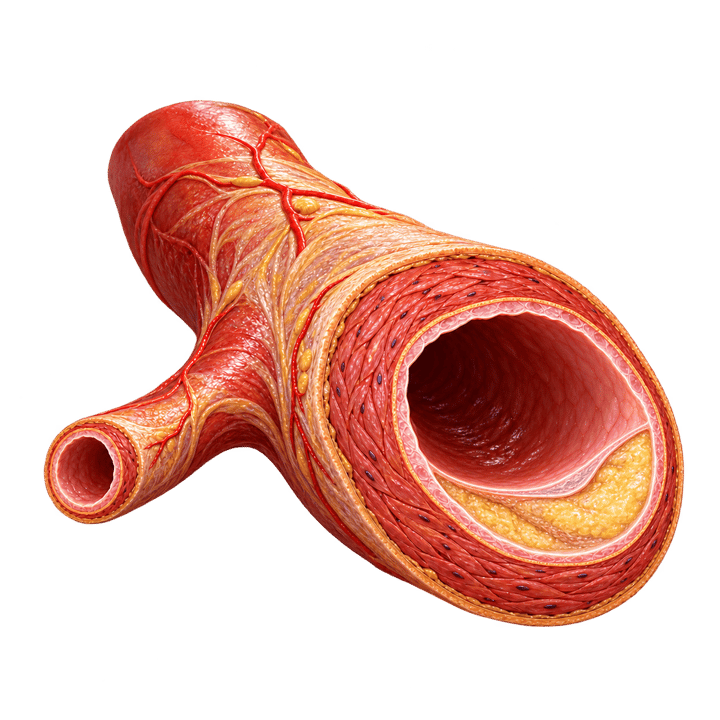
A calcium scan is a quick CT scan of your heart, with no dye and no needle. It counts the calcium in the walls of your heart’s arteries, which is a sign of hardened plaque, and reports it as a score in Agatston units. The guideline sorts the scores this way.
| Score | What it means |
|---|---|
| 0 | No calcified plaque seen |
| 1 to 99 | Minimal to mild plaque |
| 100 to 299 | Moderate |
| 300 to 999 | Severe |
| 1,000 or more | Extensive |
Who it’s for
The 2026 guideline recommends it for adults at intermediate risk, and some at borderline risk, when the statin decision is still uncertain, and says it’s generally for men from 40 and women from 45. It can also help someone already at intermediate or high risk decide how hard to treat.
What you do with the result
- Zero. If you’d rather focus on habits and have none of the higher-risk conditions (FH or an LDL of 190 or more, diabetes past 40, smoking, or a strong family history of early heart disease), it’s reasonable to hold off on medicine and rescan in 3 to 7 years.
- Above zero. The guideline recommends starting treatment, especially at 100 or more or above the 75th percentile for your age and sex. A score of 1 to 99 under the 75th percentile points to a moderate statin and an LDL goal under 100.
- Calcium found by chance on a chest CT done for another reason counts too, and should be part of the decision.
The costs and risks
Insurance coverage varies, and the guideline puts out-of-pocket costs at $50 to $250. The radiation is about 1 millisievert, similar to a mammogram. Fewer than 1 in 10 people get an incidental finding, like a spot on the lung, and some of those need follow-up. A few people find a high score stressful, so it helps to decide beforehand what you’d do with each result.
When a different scan fits
A calcium scan only sees hardened plaque. For people likely to have soft plaque, such as those with inflammatory diseases, HIV or diabetes, the guideline says a coronary CT angiogram, which uses dye, may sometimes help. Every heart and cholesterol test lists the rest.
2 sources
- Blumenthal RS, Morris PB, Gaudino M and others, 2026 ACC/AHA guideline on the management of dyslipidemia, Circulation, 2026, section 4.2.3.6 and Table 1api.iscpcardio.org
- American College of Cardiology, ACC/AHA issue updated guideline for managing lipids, cholesterol, press release, 13 March 2026acc.org