The higher your HDL, the better
Short answerNot the way you think
On this page
Not the way you think. People with low HDL do get more heart disease, so a low number tells you something. But when scientists raised HDL on purpose, with three kinds of drugs in tens of thousands of people, heart attacks didn’t fall. People born with genes that raise HDL weren’t protected either. Watch your LDL and non-HDL instead.
What we’d do
Take a low HDL as a nudge to move more, lose extra weight and look hard at your triglycerides and non-HDL, which tend to be off at the same time. Don’t take anything to raise HDL, and don’t feel safe because yours is high. The 2026 US guideline gives HDL no goal, and gives LDL and non-HDL one.
If you remember three things
- Low HDL is a warning sign. Under 40 mg/dL (1.0 mmol/L) is low, and it goes with higher risk.
- Raising HDL with drugs didn’t help. Niacin and two newer drugs pushed it up without cutting heart attacks.
- A high HDL doesn’t cancel a high LDL. Your goals are for LDL and non-HDL.
Why people believe it
The nickname did a lot of the work. If LDL is the “bad cholesterol”, HDL must be the good one, and more of a good thing sounds better. Big population studies backed it up, finding fewer heart attacks in people with higher HDL, in study after study. HDL particles also carry cholesterol away from tissues, which made a neat story about HDL cleaning out arteries.
Drug companies set out to raise it, and a lot of people with a high HDL relaxed about the rest of their panel.
What HDL is and does
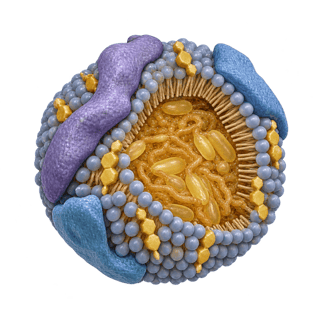
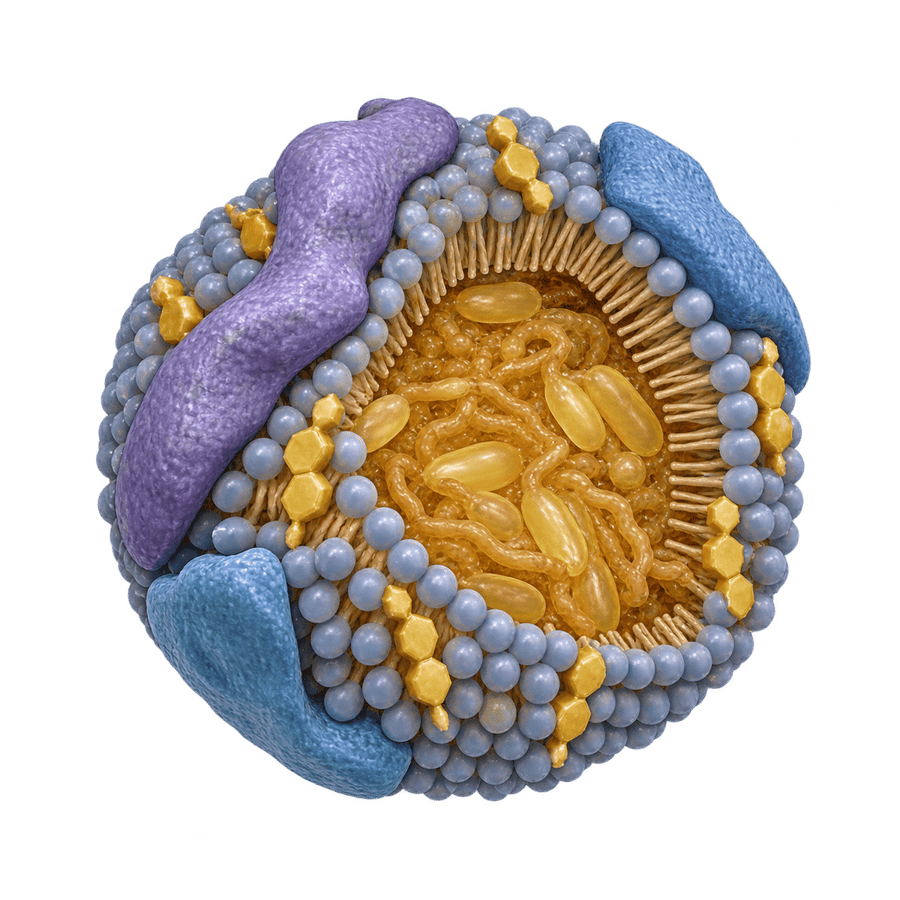
HDL particles pick up spare cholesterol from tissues and help carry it back toward the liver, which is where the “good cholesterol” story came from. They don’t carry ApoB, so they aren’t among the particles that get stuck in artery walls. The HDL number on your panel is the amount of cholesterol inside those particles. It doesn’t measure how well they do their job.
Like a check-engine light
A low HDL is like a check-engine light on your dashboard. It tells you something deserves a look. Putting tape over the light, or wiring it to stay off, doesn’t fix the engine. Raising HDL with a pill turned out to be the tape.
What the studies found
Genes that raise HDL
Voight and colleagues, Lancet 2012, over 116,000 people
People born with a gene variant that raised their HDL had the same heart attack risk as everyone else. From their HDL alone, they should have had 13% fewer. A score built from 14 HDL-raising genes didn’t lower risk either.
In the same study, genes that raised LDL did raise heart attack risk, as expected.
Niacin on top of a statin
AIM-HIGH, 3,414 people with heart disease, 2011
Niacin raised HDL from 35 to 42 mg/dL and lowered triglycerides. Heart attacks, strokes and related events happened to 16.4% on niacin and 16.2% on placebo. The trial stopped early for lack of benefit.
Everyone already had a low LDL on a statin.
Niacin again, much bigger
HPS2-THRIVE, 25,673 people with heart disease, 2014
HDL went up about 6 mg/dL and LDL down about 10. Major heart and blood vessel events: 13.2% on niacin, 13.7% on placebo, a difference too small to be sure of. Niacin also brought more problems with diabetes control.
The niacin came combined with a second drug, laropiprant.
CETP drugs
Torcetrapib, 15,067 people, 2007. Dalcetrapib, 15,871 people, 2012
Torcetrapib raised HDL 72%, and heart events and deaths went up. Dalcetrapib raised HDL by about a third and changed nothing: 8.0% against 8.3%.
Torcetrapib also raised blood pressure by about 5 points.
The 2026 guideline says trials don’t support adding niacin or fibrates to a statin to prevent heart attacks and strokes. One drug in the class did help a little. Anacetrapib cut coronary events 9% in 30,449 people, and it lowered non-HDL by 17 mg/dL while it raised HDL, so the benefit fits the drop in the particles that cause plaque.
What a low HDL does tell you
In US adults tested from 2021 to 2023, 13.8% had an HDL under 40 mg/dL, 21.5% of men and 6.6% of women. A low HDL often shows up with high triglycerides, and doctors still use HDL in risk calculators like PREVENT, since it helps predict risk even though raising it doesn’t change it.
The useful response is to work on the things that come with it. Moving more raised HDL about 2.5 mg/dL across 25 trials, and the guideline’s activity advice also lowers triglycerides. The smallest dose that moved HDL was about 120 minutes a week, and longer sessions did more. Two drinks a day raise HDL about 4 points in studies, and that’s no reason to drink, since alcohol raises triglycerides too (triglycerides and HDL).
And a high HDL?
A high HDL doesn’t protect you from a high LDL, and a very high one isn’t better. In two Copenhagen studies of 116,508 people, the lowest death rates came at an HDL of about 73 mg/dL in men and 93 in women. Men at 116 or more and women at 135 or more had higher death rates, about twice as high for the men, and the authors asked for other studies to check it. Take a 220 total with an HDL of 78. The non-HDL is still 142, over the goal of 130 at borderline risk (the total cholesterol myth). The guideline sets goals for LDL and non-HDL whatever your HDL is.
11 sources
- Madsen CM, Varbo A, Nordestgaard BG, Extreme high high-density lipoprotein cholesterol is paradoxically associated with high mortality in men and women: two prospective cohort studies, European Heart Journal, 2017pubmed.ncbi.nlm.nih.gov
- HPS3/TIMI55-REVEAL Collaborative Group, Effects of anacetrapib in patients with atherosclerotic vascular disease, NEJM, 2017pubmed.ncbi.nlm.nih.gov
- Voight BF and others, Plasma HDL cholesterol and risk of myocardial infarction: a mendelian randomisation study, Lancet, 2012pubmed.ncbi.nlm.nih.gov
- AIM-HIGH Investigators, Niacin in patients with low HDL cholesterol levels receiving intensive statin therapy, NEJM, 2011pubmed.ncbi.nlm.nih.gov
- HPS2-THRIVE Collaborative Group, Effects of extended-release niacin with laropiprant in high-risk patients, NEJM, 2014pubmed.ncbi.nlm.nih.gov
- Barter PJ and others, Effects of torcetrapib in patients at high risk for coronary events, NEJM, 2007pubmed.ncbi.nlm.nih.gov
- Schwartz GG and others, Effects of dalcetrapib in patients with a recent acute coronary syndrome, NEJM, 2012pubmed.ncbi.nlm.nih.gov
- Blumenthal RS, Morris PB, Gaudino M and others, 2026 ACC/AHA guideline on the management of dyslipidemia, JACC and Circulation, 2026doi.org
- Kodama S and others, Effect of aerobic exercise training on serum levels of high-density lipoprotein cholesterol: a meta-analysis, Archives of Internal Medicine, 2007pubmed.ncbi.nlm.nih.gov
- Rimm EB and others, Moderate alcohol intake and lower risk of coronary heart disease: meta-analysis of effects on lipids and haemostatic factors, BMJ, 1999pubmed.ncbi.nlm.nih.gov
- CDC NCHS Data Brief 515, Total and high-density lipoprotein cholesterol in adults: United States, August 2021 to August 2023cdc.gov