Thin people who eat well don't get high cholesterol
Short answerNo
On this page
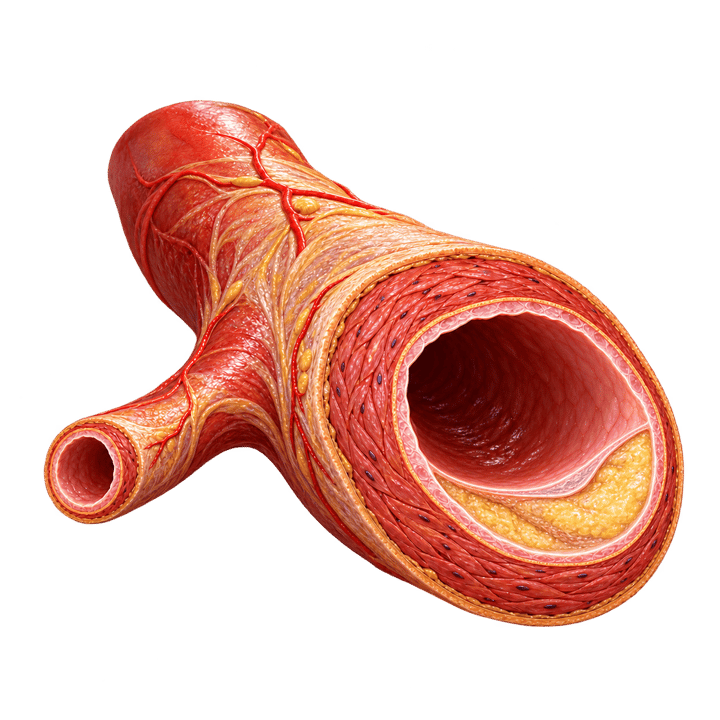
No. Your body makes all the cholesterol it needs, mostly in your liver, and your genes set how fast your liver clears LDL from your blood. Familial hypercholesterolemia (FH) affects 1 in 250 to 300 people, and up to 9 in 10 of them don’t know. An underactive thyroid, menopause and a keto diet can raise LDL in slim, careful eaters too.
What we’d do
Get a cholesterol panel whatever you weigh, from age 19 and at least every 5 years. If your LDL is high and your diet is already good, don’t punish yourself with a stricter one. Take the number to a doctor, ask about FH and your thyroid, and look at your family history. At 190 or more, book that visit before you change anything else.
If you remember three things
- Your weight doesn’t tell you your LDL. Only a blood test does.
- Genes set the drain. FH is common, inherited and mostly undiagnosed.
- Other causes hide in plain sight. Thyroid, menopause, keto, fast weight loss and some medicines all raise LDL.
Why people believe it
High cholesterol gets talked about next to weight, fast food and sitting still, so it sounds like a lifestyle problem with a lifestyle cause. If you’re slim, run three days a week and eat salads, a high number feels like a mistake. Many people in that spot assume it’ll fix itself, or that the test was wrong.
There’s some truth underneath. Weight gain and a lot of saturated fat do raise LDL, and losing weight lowers triglycerides. But your LDL depends mostly on how fast your liver clears it, and that’s set before you take your first bite.
Like judging the plumbing by the living room
Judging your LDL by your waistline is like judging a house’s plumbing by how tidy the living room is. A spotless room says nothing about a slow drain behind the wall. Your liver’s LDL receptors are that drain (how it works), and some people are born with fewer of them.
What the evidence says
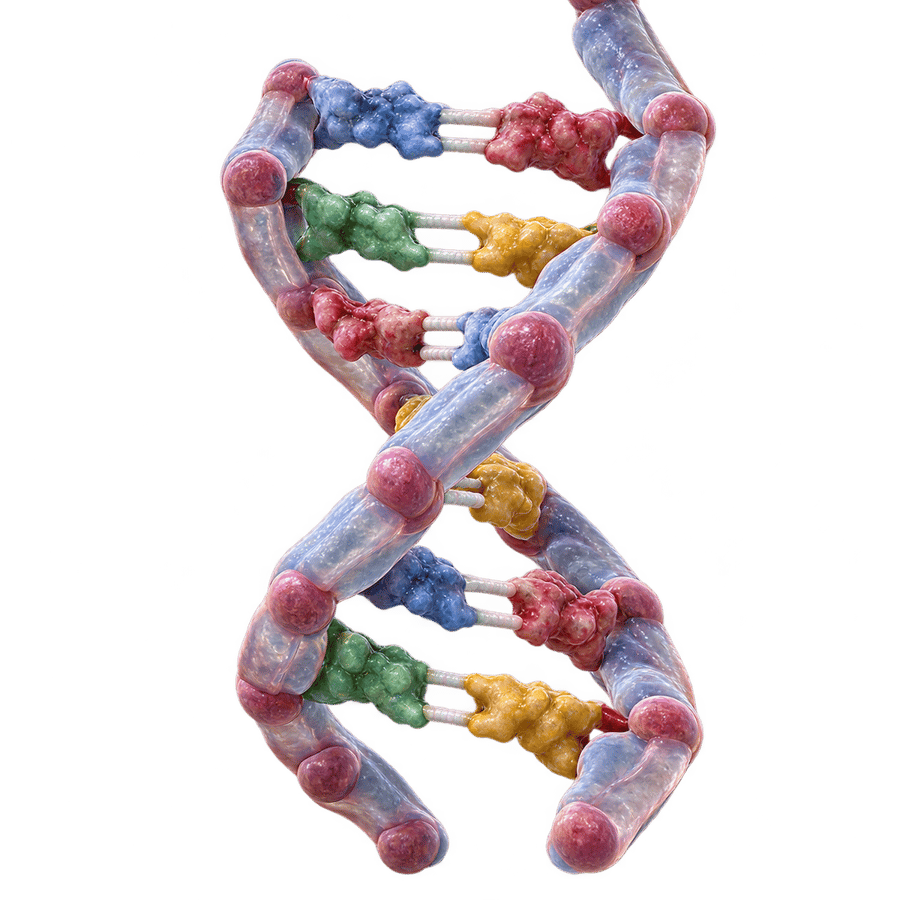
FH is common. The 2026 US guideline puts it at 1 in 250 to 300 people, with as many as 90% undiagnosed. It raises the risk of early heart disease two to four times, and as many as 20% of adults who have a heart attack young have the FH pattern. Michael Brown and Joseph Goldstein won the 1985 Nobel Prize for showing that cells from people with FH have half the normal LDL receptors, or none.
It doesn’t care about your weight. People with one copy of an FH gene have cholesterol two to three times normal from birth, whatever they eat. Diet still helps, and at FH levels the guideline also recommends a statin.
Menopause raises LDL on its own schedule. In SWAN, a study that followed 1,054 women with yearly exams through menopause, total cholesterol, LDL and ApoB jumped in the year before and after the last period. The other risk factors rose slowly with age. In US adults over 60, 16.4% of women have a total cholesterol of 240 or more, against 5.6% of men.
A healthy-looking diet can be high in saturated fat. Coconut oil, butter in “clean” recipes and lots of cheese or red meat on a low carb diet all add up. A tablespoon of coconut oil holds 11.2 g of saturated fat, more than a tablespoon of butter at 7.3 (the coconut oil myth).
The causes the guideline lists
The 2026 guideline’s list of things that raise LDL includes several that slim, healthy people can have:
- Genes: FH, and many small gene effects added together
- An underactive thyroid (hypothyroidism)
- The menopausal transition, and pregnancy
- Ketosis, from a keto diet (the keto myth)
- Rapid weight loss, so retest once your weight has held for a few weeks
- Anorexia nervosa
- Some medicines: high-dose thiazide water pills, steroids like prednisone, estrogens, androgens, some antipsychotics and cyclosporine
- Liver and kidney conditions, like a blocked bile duct or nephrotic syndrome
If your LDL is high and none of the usual causes fit, the guideline’s answer is to look for these, starting with your thyroid, your medicines and your family.
What to do with a high number
- Test, whatever you weigh. From 19, at least every 5 years.
- At 190 or more, see a doctor. That’s where the guideline looks for FH and recommends a statin.
- Ask about your family. A parent, brother or sister with a heart attack or stroke young (men before 55, women before 65) raises your risk and points to genes. If you have FH, your relatives should be tested, children from age 2.
- Test Lp(a) once. It’s another mostly genetic particle, and about 1 in 5 people have a level that raises risk (when it’s your genes).
The quiz asks about your family, your age and your habits, and tells you whether your numbers look more like your plate or your genes.
6 sources
- Blumenthal RS, Morris PB, Gaudino M and others, 2026 ACC/AHA guideline on the management of dyslipidemia, JACC and Circulation, 2026doi.org
- The Nobel Assembly at the Karolinska Institute, The Nobel Prize in Physiology or Medicine 1985, press releasenobelprize.org
- MedlinePlus, Cholesterol, US National Library of Medicinemedlineplus.gov
- Matthews KA and others, Are changes in cardiovascular disease risk factors in midlife women due to chronological aging or to the menopausal transition? (SWAN), JACC, 2009pubmed.ncbi.nlm.nih.gov
- CDC NCHS Data Brief 515, Total and high-density lipoprotein cholesterol in adults: United States, August 2021 to August 2023cdc.gov
- US Department of Agriculture, FoodData Central, SR Legacy 171412 (coconut oil) and 173410 (butter)fdc.nal.usda.gov