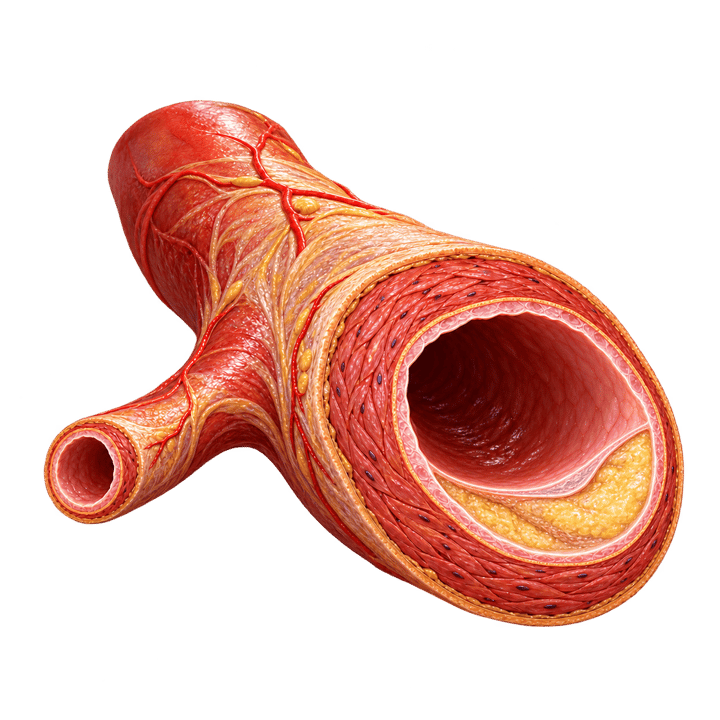
Cholesterol supplements work about as well as a prescription
Short answerNo
On this page
No. In a 2023 trial, 190 adults took a 5 mg statin, a placebo, or one of six best-selling supplements for 28 days. The statin lowered LDL 35% more than placebo. Fish oil, cinnamon, garlic, turmeric, plant sterol pills and red yeast rice didn’t lower it more than placebo at all.
What we’d do
Put the supplement money toward food that’s been tested: a bag of psyllium husk, olive oil in place of butter, oats, beans, soy and nuts. If you want a plant sterol, get it the way the portfolio diet did, in a fortified margarine as part of a whole diet. If food changes can’t close your gap, talk to your doctor about a prescription, since a low dose statin did in 28 days what none of the bottles managed.
If you remember three things
- Six popular supplements failed a fair test. None beat a sugar pill for LDL in 28 days.
- The 2026 guideline recommends against them. Supplements aren’t recommended for lowering LDL or triglycerides.
- Tested foods do work. Psyllium, the fat swap and the portfolio diet all have trials behind them.
Why people believe it
Supplements sit in the same pharmacy as the statins, often with a heart on the label and words like “supports healthy cholesterol”. They feel natural and safe, and they skip the doctor’s visit. Some have small studies behind them, and a few have a story attached about containing something close to a real drug.
People buy them in large numbers. In a US national survey from 2017 to 2020, 73% of adults with heart disease were taking at least one supplement, and almost a fifth took one “for heart health”, according to the 2026 guideline.
Like a diet book and a bridge
Anyone can publish a diet book, and nobody checks that it works before it hits the shelf. A bridge has to pass inspection before anyone drives on it. Supplements are closer to the diet book. The FDA says it has no authority to approve supplements for safety and effectiveness before they’re sold. A prescription drug has been through the inspection, in trials before it reached the pharmacy.
What the studies found
SPORT
190 adults with an LDL of 70 to 189 and a raised 10-year risk, Laffin and colleagues, JACC 2023
After 28 days, a 5 mg statin (rosuvastatin) had lowered LDL 35.2% more than placebo. None of the six supplements, fish oil, cinnamon, garlic, turmeric, plant sterols or red yeast rice, lowered LDL more than placebo. Side effects were about as common in every group.
One center, 28 days, and single-blind, so only the participants didn’t know what they were taking.
The 2026 US guideline
Its review of the supplement trials
Berberine, garlic, turmeric and red yeast rice have been linked with modest drops in cholesterol, cinnamon with none, and the results were inconsistent across trials. Its verdict: “the use of dietary supplements is not recommended to lower LDL-C or TG”.
The guideline also warns that store-bought fish oil can raise LDL and the risk of an irregular heart rhythm (atrial fibrillation).
What about plant sterols?
This is where it gets interesting. Plant sterols can lower LDL. Across 124 studies, 0.6 to 3.3 g a day of plant sterols or stanols lowered it 6 to 12% on average. And the portfolio diet, which matched a starter statin in a month-long trial, included plant sterols, described by the guideline as coming in an enriched margarine eaten as part of a whole diet with soy, nuts and fiber.
The sterol pills in SPORT, taken on their own for 28 days, didn’t beat placebo. So the evidence points to sterols as part of what you eat, inside a diet that does several things at once, rather than as a capsule beside an unchanged plate.
What does work, sized
| Change | LDL change | From |
|---|---|---|
| 10 g of psyllium husk a day (a fiber, sold as a supplement but tested like a food) | About −13 mg/dL | 28 trials |
| Moving 5% of calories from saturated fat to vegetable oils | About −11 | 69 feeding trials |
| The portfolio diet for a month | −28.6% | One trial of 46 adults |
| A moderate statin | −30 to −49% | The 2026 guideline |
Psyllium is the one bottle with the trials behind it, and it works as a fiber in your gut, carrying out bile so your liver pulls in more LDL (how it works).
The best case for supplements
“SPORT was small and short. Maybe supplements just work slowly.” That’s possible for any one of them, and 28 days is a short trial. But the statin showed its full effect in the same 28 days, and the guideline, looking at the wider set of trials, still found the supplement results inconsistent. For fish oil, the guideline adds that store-bought products vary in what they contain.
If you take a statin, don’t swap it for a supplement. Bring any question about it to your prescriber.
7 sources
- Laffin LJ and others, Comparative effects of low-dose rosuvastatin, placebo, and dietary supplements on lipids and inflammatory biomarkers (SPORT), JACC, 2023pubmed.ncbi.nlm.nih.gov
- Blumenthal RS, Morris PB, Gaudino M and others, 2026 ACC/AHA guideline on the management of dyslipidemia, JACC and Circulation, 2026doi.org
- Ras RT, Geleijnse JM, Trautwein EA, LDL-cholesterol-lowering effect of plant sterols and stanols across different dose ranges, British Journal of Nutrition, 2014pubmed.ncbi.nlm.nih.gov
- Jenkins DJ and others, Effects of a dietary portfolio of cholesterol-lowering foods vs lovastatin on serum lipids and C-reactive protein, JAMA, 2003pubmed.ncbi.nlm.nih.gov
- US Food and Drug Administration, FDA 101: dietary supplementsfda.gov
- Jovanovski E and others, Effect of psyllium fiber on LDL cholesterol and alternative lipid targets, American Journal of Clinical Nutrition, 2018pubmed.ncbi.nlm.nih.gov
- Mensink RP, Effects of saturated fatty acids on serum lipids and lipoproteins, World Health Organization, 2016, as tabulated by Food Standards Australia New Zealandfoodstandards.gov.au