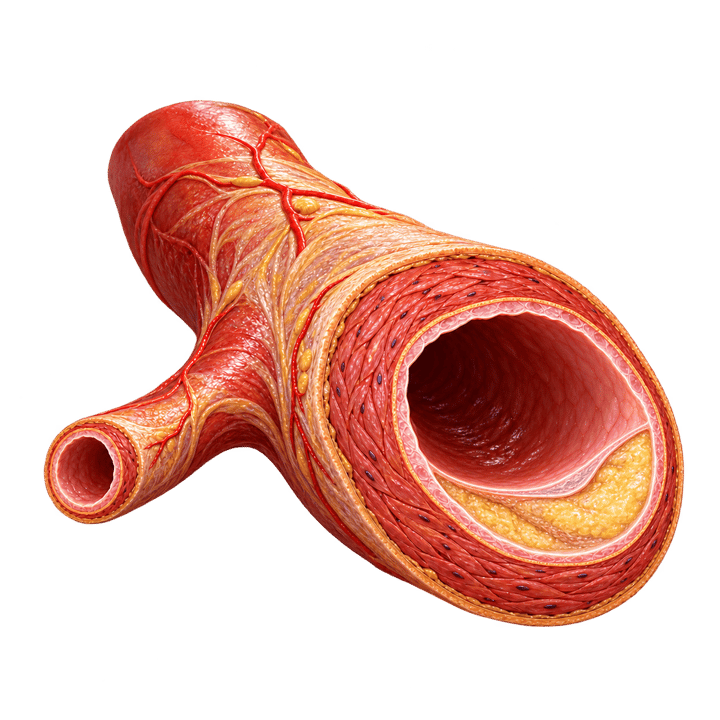
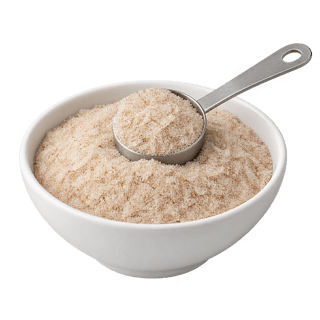
How much psyllium should I take to lower cholesterol?
About 10 g of psyllium husk a day. Across 28 trials with 1,924 people, a median of 10.2 g a day lowered LDL by about 13 mg/dL (0.33 mmol/L). Split it over meals and take each dose with at least 8 ounces of liquid.
What we’d do
Psyllium is the biggest single thing you can add, and it’s cheap. We’d start with a few grams a day and work up to about 10 g over a week, split between two or three meals, each with a full glass of water. If you take other medicines, ask your pharmacist how far apart to take them.
Why it gets overlooked
Psyllium is sold as a fiber supplement for constipation, so most people never think of it for cholesterol. Next to the supplements sold as “natural statins” it looks plain. But in trials it lowered LDL more than any other single food you can add.
What the trials found
| Number | Change with about 10 g a day |
|---|---|
| LDL | about 13 mg/dL lower (10 to 15) |
| Non-HDL | about 15 lower |
| ApoB | about 5 lower (0.05 g/L) |
The trials lasted at least 3 weeks and included people with and without high cholesterol. The reviewers rated the LDL evidence as moderate quality, because results varied between trials, and the ApoB evidence as high quality.
The FDA lets foods claim a heart benefit at 7 g or more a day of soluble fiber from psyllium husk, with at least 1.7 g per serving and husk at least 95% pure.
How it works
Psyllium thickens into a gel in your gut. Your liver makes bile from cholesterol and sends it into the gut to help digest fat. In hamsters fed psyllium, the liver’s bile-making enzyme became 3 to 4 times more active, and the cholesterol stored in the liver fell. A drug called cholestyramine, which traps bile in the gut, had the same effect.
The likely story is that the gel takes bile out with it, so the liver uses up more cholesterol making new bile. It’s like a sponge that soaks up bile and carries it out of the house. Nobody has traced every step in people, but the trials show the result.
Psyllium against oats
| Fiber | Daily dose in trials | LDL |
|---|---|---|
| Psyllium husk | about 10 g | about 13 lower |
| Oat beta-glucan | about 3.5 g | about 7 lower |
The doses aren’t measured the same way. Psyllium trials weigh the husk, and oat trials count only the beta-glucan inside the oats. In practice psyllium is the easier way to get a big dose.
Safety
MedlinePlus says to drink at least 8 ounces (240 ml) of liquid with each dose, and to tell your doctor first if you have trouble swallowing. Don’t take digoxin, aspirin or nitrofurantoin within 3 hours of psyllium. Call a doctor right away if you have trouble breathing or swallowing, stomach pain, a rash or itching, nausea or vomiting after taking it. If you become pregnant while taking it, call your doctor.
5 sources
- Jovanovski E and others, Effect of psyllium fiber on LDL cholesterol and alternative lipid targets, non-HDL cholesterol and apolipoprotein B, American Journal of Clinical Nutrition, 2018pubmed.ncbi.nlm.nih.gov
- US Code of Federal Regulations, 21 CFR 101.81, Health claims: soluble fiber from certain foods and risk of coronary heart diseaselaw.cornell.edu
- MedlinePlus, Psylliummedlineplus.gov
- Horton JD, Cuthbert JA and Spady DK, Regulation of hepatic 7 alpha-hydroxylase expression by dietary psyllium in the hamster, Journal of Clinical Investigation, 1994pubmed.ncbi.nlm.nih.gov
- Ho HV and others, The effect of oat beta-glucan on LDL-cholesterol, non-HDL-cholesterol and apoB for CVD risk reduction, British Journal of Nutrition, 2016pubmed.ncbi.nlm.nih.gov