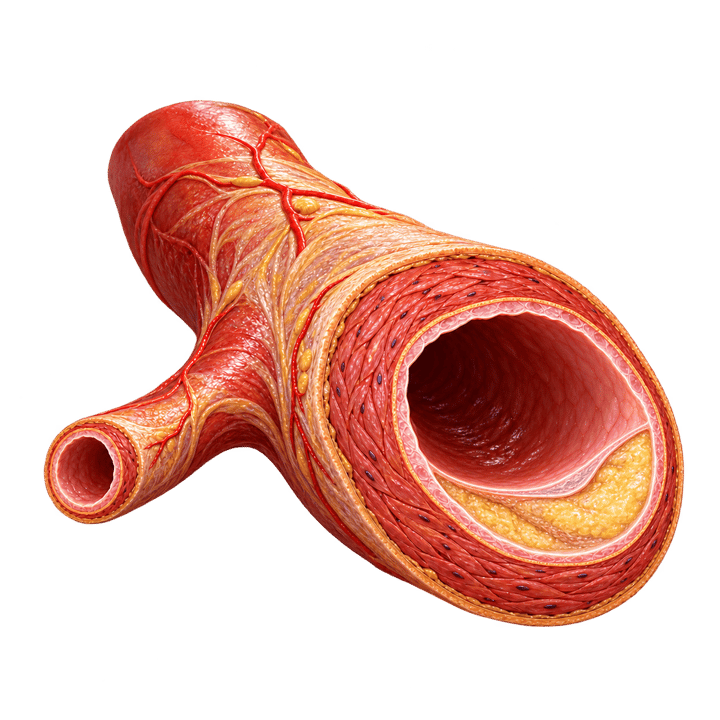
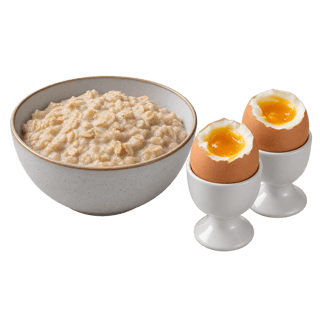
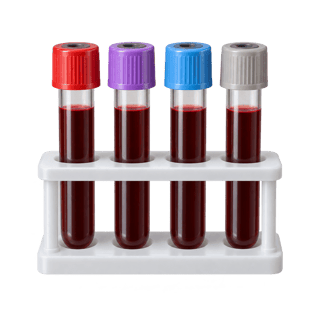
Do you need to fast for a cholesterol test?
Usually not. After a normal meal, LDL goes down by about 8 mg/dL at most and triglycerides go up by about 26. The 2026 US guideline accepts a fasting or a nonfasting panel. Fast if your doctor asks, or if a nonfasting test showed triglycerides of 400 or more.
What we’d do
Don’t fast unless you’ve been asked to. Do the same thing every time instead. If your first test was after breakfast, make the retest after breakfast too, at the same lab, so the meal never shows up as a change.
Why people still fast
For decades lipid panels were taken fasting, and many people still hear “nothing after midnight” from habit. Triglycerides really do rise after you eat, which is where the rule came from. The question is by how much.
What a meal moves
Researchers in Copenhagen looked at 33,391 adults who had eaten normally before their blood draw, and compared their numbers by the hours since their last meal. These are the biggest changes they found.
| Number | Biggest change after a normal meal |
|---|---|
| Triglycerides | up about 26 mg/dL (0.3 mmol/L), for up to 6 hours |
| Total cholesterol | down about 8 (0.2 mmol/L), for 3 to 5 hours |
| LDL | down about 8 (0.2 mmol/L) |
| HDL | down about 4 (0.1 mmol/L) |
| Non-HDL | no change |
| ApoB | no change |
The surprise is that LDL went slightly down after eating, not up. And in a second group of 9,319 people followed for 14 years, nonfasting numbers still predicted heart attacks and strokes. People in the worst third had 1.7 to 2.4 times the risk of people in the best third.
It works like weighing yourself. Lunch adds a little to the scale, but if you always weigh at the same time of day you can still compare one week with the next.
When you should fast
The guideline asks for a fasting panel in three cases:
- a parent, brother or sister had heart disease early, or someone in the family has an inherited lipid disorder
- you have a known triglyceride disorder
- a nonfasting test showed triglycerides of 400 or more
The last one has a technical reason behind it. The 1972 formula many labs use to calculate LDL can’t be used at triglycerides of 400 or more, so a fasting retest gives a cleaner number (see why does my report say my LDL is calculated?).
The two triglyceride lines
Because of the meal, the guideline uses two lines for treating triglycerides with food and exercise: 150 mg/dL (1.7 mmol/L) fasting and 175 (2.0) after eating. If your nonfasting triglycerides are 160, you’re under the line that applies to you.
Lp(a) and ApoB need no fasting either. If your two panels were taken differently, one fasting and one not, Did it really go down? takes the meal’s share out before it compares them.
3 sources
- Langsted A, Freiberg JJ and Nordestgaard BG, Fasting and nonfasting lipid levels: influence of normal food intake on lipids, lipoproteins, apolipoproteins, and cardiovascular risk prediction, Circulation, 2008pubmed.ncbi.nlm.nih.gov
- Blumenthal RS, Morris PB, Gaudino M and others, 2026 ACC/AHA guideline on the management of dyslipidemia, JACC, 2026doi.org
- The same guideline, full text, Circulation, 2026api.iscpcardio.org