Are home cholesterol tests accurate?
On this page
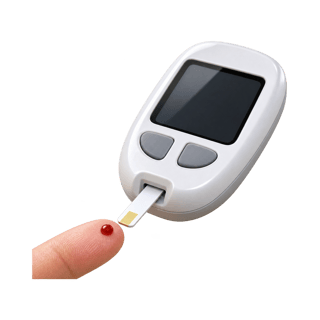
They can be close. The FDA says a home test is about as accurate as your doctor’s if you follow the directions carefully. But most home meters calculate LDL from the other numbers, the published evidence on many of them is thin, and a surprising result should be repeated at a lab.
What we’d do
Use a home test to see which way things are heading between lab panels, and a lab panel for any number you’ll act on. Always test the same way, and if a home result surprises you, high or low, check it at a lab before you change anything.
Why people trust them more than they should
A number on a screen looks exact. But a finger-prick drop isn’t the same sample as a tube of blood from your arm, the person doing it isn’t trained, and the box can’t tell you if your technique was off. The FDA’s own page adds that accuracy varies by brand, and that tests “traceable” to a CDC program may be more accurate than others.
What the lab standard is
CDC certifies cholesterol tests against its reference labs. A certified test has to stay within 3% on average for total cholesterol, 5% for HDL, 4% for LDL and 5% for triglycerides. Ask whether a device or kit is on CDC’s certified lists for the number you care about, and check the date, since certificates expire after two years.
What the studies found
In 2025, UK researchers pulled together 22 studies of 6 finger-prick devices used for quick cholesterol checks. Most of the devices met at least one US accuracy standard for one number. Only two mostly met the standards for both bias and precision, and both are machines that clinics use. The researchers found the studies varied a lot and often showed the device and the lab disagreeing in one direction.
The LDL problem
Most home meters measure total cholesterol, HDL and triglycerides, then work LDL out from them, the way most labs do. Any error in the three measured numbers carries into the LDL. If your triglycerides are high, that calculated LDL is the least reliable number on the screen.
How to get a cleaner result
- Follow the box exactly. The FDA’s line on accuracy depends on it.
- Wipe away the first drop of blood, and don’t squeeze the finger too tightly, as the WHO’s finger-prick guidance says.
- Match your tests. Same device, same time of day, fasting or not the same way each time.
- Allow for noise. Even a perfect test moves. Two LDL results can differ by about 19% with nothing changed, so a small change on a home meter tells you very little.
When a home result needs a doctor
A home test is a screening number, never a diagnosis. Book a doctor if a result shows an LDL of 190 or more or triglycerides of 500 or more, and never change or stop a medicine because of a home result.
Chest pain or pressure, or pain that spreads to your jaw, neck, back or arms, is not something to test for. Call 911.
7 sources
- US Food and Drug Administration, Home use tests: cholesterolfda.gov
- Can we trust published evidence on point-of-care tests for cholesterol? A rapid review, BMJ Open, 2025pubmed.ncbi.nlm.nih.gov
- CDC Clinical Standardization Programs, certification criteria for cholesterol test manufacturerscdc.gov
- CDC Clinical Standardization Programs, lists of CDC-certified cholesterol testscdc.gov
- World Health Organization, Practical guidance on capillary sampling (finger and heel-prick)cdn.who.int
- Smith SJ, Cooper GR, Myers GL and Sampson EJ, Biological variability in concentrations of serum lipids, Clinical Chemistry, 1993pubmed.ncbi.nlm.nih.gov
- CDC, Heart attack symptomscdc.gov