What is Lp(a), and should I get tested?
On this page
Lp(a), said “L-P-little-a”, is a particle like LDL that’s set mostly by your genes, and food barely moves it. The 2026 US guideline says every adult should have it measured at least once. About 1 in 5 people are at 125 nmol/L (50 mg/dL) or more, which carries about 40% more risk of heart disease.
What we’d do
Ask your doctor to add Lp(a) to your next panel, once. You don’t need to fast. If it’s high, you can’t eat it down, but you can push your LDL lower and deal with blood pressure and smoking, which is what the guideline asks for. And tell your parents, brothers, sisters and children, since they should get tested too.
Why most people have never heard of it
A standard panel doesn’t include it, so most people have never had a number for it. Until 2026 the US guideline didn’t ask for it in everyone. Now it recommends measuring it “at least once” in all adults.
What it is
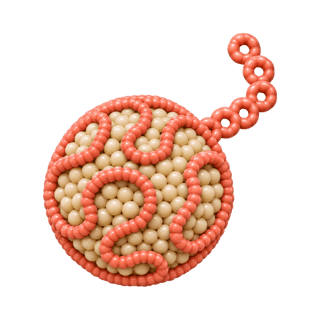
Lp(a) looks like an LDL particle with an extra protein strand, called apo(a), wrapped onto it. Your level is set mostly by one gene, LPA, and it stays about the same your whole life. It’s like your height. It’s settled early, and you only need to measure it once.
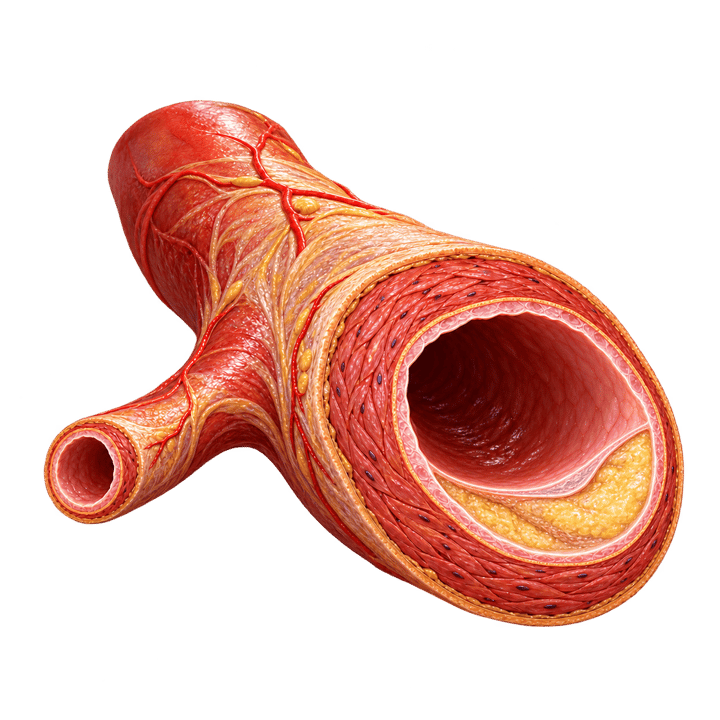
Levels are typically highest in people of African or South Asian ancestry, but a given level carries about the same risk whatever your ancestry. High Lp(a) is linked to heart attacks and strokes and also to a narrowing of the heart’s aortic valve, and the risk adds to your LDL rather than replacing it.
What the numbers mean
The guideline’s table, from the UK Biobank, compares each level with the middle of the population, about 20 nmol/L (7 mg/dL).
| Lp(a) | Risk against the middle |
|---|---|
| under 75 nmol/L (30 mg/dL) | the reference |
| 75 to 124 (30 to 49) | about 1.2 times |
| 125 (50) | about 1.4 times |
| 250 (100) | about 2 times |
| 430 (180) | about 4 times, similar to FH |
About 1 in 5 people are at 125 nmol/L or more, about 1 in 20 at 250, and about 1 in 100 at 430.
Labs report Lp(a) in nmol/L or mg/dL. The two count different things and don’t convert exactly, and the guideline treats 125 nmol/L and 50 mg/dL as the same line. Use the same unit, and ideally the same lab, if you ever test again.
Why food can’t fix it
The guideline says Lp(a) is “minimally modified by lifestyle factors.” A few things can change it, like kidney, liver or thyroid disease, pregnancy, menopause and some medicines. For levels near the lines in the table, the guideline says a repeat test can be considered.
What a high result changes
The guideline treats Lp(a) of 125 nmol/L or more as a risk enhancer. It says a high level should lead to lowering LDL harder and dealing with other risk factors, and it recommends testing first-degree relatives (parents, siblings and children). Your doctor uses it alongside your 10-year risk to decide what to do.
2 sources
- Blumenthal RS, Morris PB, Gaudino M and others, 2026 ACC/AHA guideline on the management of dyslipidemia, JACC, 2026doi.org
- The same guideline, full text, Circulation, 2026api.iscpcardio.org