Does exercise lower cholesterol?
On this page
A little. Across 148 trials of exercise training, LDL fell about 7 mg/dL, triglycerides about 8, and HDL rose about 2. The LDL effect was the least consistent of the three. The 2026 US guideline asks for 150 minutes a week of brisk activity, plus strength work twice.
What we’d do
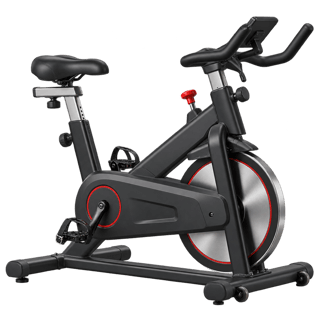
Exercise for your heart, and count the cholesterol change as a bonus. Walk briskly, cycle or swim 150 minutes a week, lift twice, and make sessions longer before you make them harder. For LDL itself, the fat swap and psyllium do more, so do those too.
Why people expect more
Exercise is the first thing anyone suggests for heart health, so it seems like it should fix a cholesterol number. It does a lot for your heart. The guideline calls physical activity “the cornerstone” of a healthy lifestyle and lists lower heart disease and death rates among its benefits. Its effect on the panel itself is modest.
What the trials found
| Number | Change with exercise training | Evidence |
|---|---|---|
| LDL | about 7 lower (5 to 9) | 148 trials, in the 2026 guideline |
| Triglycerides | about 8 lower (6 to 10) | same |
| HDL | about 2 higher | same |
| HDL, aerobic exercise | about 2.5 higher | 25 trials, 2007 |
The guideline sums it up as “a tendency toward higher HDL-C, lower TG, and less consistently lower LDL-C.” Changes depended on where people started, how fit they were and how long they exercised.
In the 2007 review of 25 trials, the smallest amount that moved HDL was about 120 minutes a week. Each extra 10 minutes per session added about 1.4 mg/dL, while how often and how hard people trained made no clear difference.
How it works
The guideline gives three reasons exercise lowers triglycerides. Your body handles insulin better, you keep weight off more easily, and triglycerides get cleared from your blood faster. That’s why the guideline puts exercise first in its plan for high triglycerides.
Exercise for cholesterol is like a multitool. It does a bit of everything, and for LDL there’s a better tool in the kitchen.
What the guideline asks for
- At least 150 minutes a week of moderate activity like brisk walking, or 75 to 150 minutes of vigorous activity.
- Strength work 2 days a week, for both upper and lower body.
- Any movement counts if you’re starting from very little, the guideline notes.
How it compares
| Change | LDL, in trials |
|---|---|
| 10 g of psyllium husk a day | about 13 lower |
| Exercise training | about 7 lower |
For what exercise does to your heart rhythm, see does exercise increase HRV? on hrv.guide, and for the HDL side, how do I raise my HDL?
4 sources
- Blumenthal RS, Morris PB, Gaudino M and others, 2026 ACC/AHA guideline on the management of dyslipidemia, JACC, 2026doi.org
- The same guideline, full text, Circulation, 2026api.iscpcardio.org
- Kodama S and others, Effect of aerobic exercise training on serum levels of high-density lipoprotein cholesterol, Archives of Internal Medicine, 2007pubmed.ncbi.nlm.nih.gov
- Jovanovski E and others, Effect of psyllium fiber on LDL cholesterol and alternative lipid targets, non-HDL cholesterol and apolipoprotein B, American Journal of Clinical Nutrition, 2018pubmed.ncbi.nlm.nih.gov