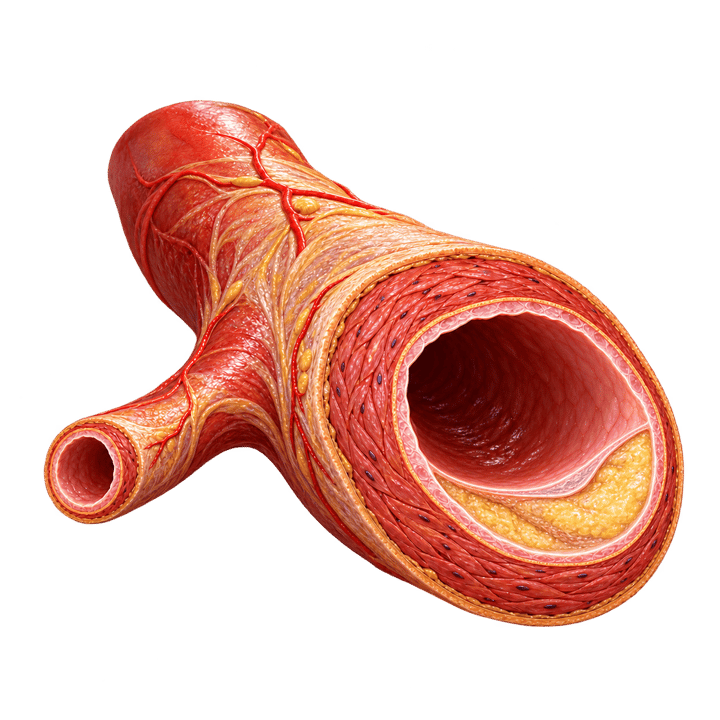
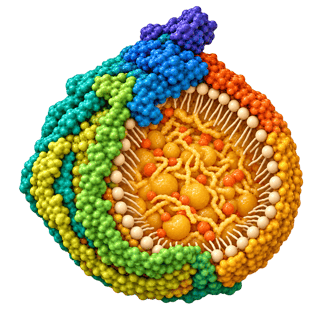
Do I need a statin?
On this page
That’s a decision for you and your doctor, and the 2026 US guideline draws the lines. A statin is recommended after a heart attack or stroke, at an LDL of 190 or more, and with diabetes from age 40 to 75. With no heart disease, it depends on your 10-year risk, and from 5% it’s recommended after a talk with your doctor.
What we’d do
Know which line you’re near before the visit, and bring your numbers and your family history. If a statin is offered, ask what it would do to your risk in numbers. If you take one, never stop it on your own. If something bothers you, tell your prescriber, who has other options.
Why it feels like a bigger decision than it is
A statin sounds like a lifelong label, and stories about side effects travel fast. The guideline’s question is narrower than that. It’s how likely you are to have a heart attack or stroke in the next 10 years, and how much lowering LDL would cut that.
Deciding on a statin is like deciding on an umbrella. It depends less on the sky right now than on the forecast for the trip.
Where the guideline draws the lines
| Your situation | What the 2026 guideline says |
|---|---|
| A heart attack, stroke, stent, bypass or other artery disease | a statin, with an LDL goal under 55 for most, or under 70 |
| LDL 190 or more | the strongest statin dose you can take, after checking for other causes |
| Diabetes, chronic kidney disease (stage 3 or 4) or HIV, ages 40 to 75 | LDL-lowering treatment whatever your LDL |
| 10-year risk of 10% or more | if treatment starts, a high-intensity statin (50% or more lower LDL) |
| 10-year risk of 5 to under 10% | at least a moderate-intensity statin, after a talk with your doctor |
| 10-year risk of 3 to under 5% | can be considered, more so with things that raise risk, and a calcium scan can help decide |
| Under 3%, ages 30 to 59, with LDL 160 to 189 | a moderate-intensity statin is reasonable |
| Over 75 | can be considered alongside lifestyle |
Your doctor works out the 10-year risk with the PREVENT equations, for adults 30 to 79. This site never computes it.
What statins do
A moderate-intensity statin lowers LDL 30 to 49%, and a high-intensity one 50% or more. In 26 trials with about 170,000 people, each 39 mg/dL lower LDL cut heart attacks, strokes and artery procedures by about a fifth, and deaths from any cause by 10%. The benefit held even in people whose LDL started under about 77.
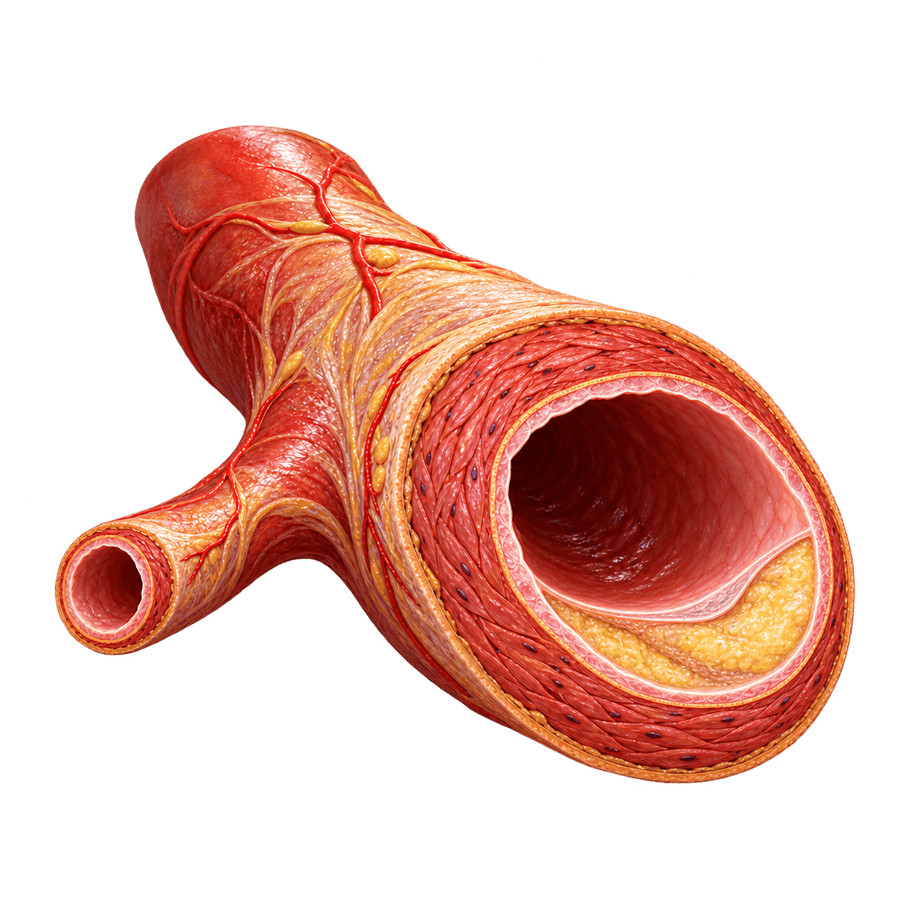
Side effects, in blinded trials
In 19 double-blind trials with 123,940 people, 27.1% of those on a statin reported muscle pain or weakness over about 4 years, against 26.6% of those on a placebo. In the first year, about 1 in 15 of the muscle reports among people taking a statin were caused by it. After the first year, people on a statin reported muscle symptoms no more often than people on the placebo.
The guideline asks doctors to take side effects seriously, to explain that stopping a statin raises heart and stroke risk, and to offer other options. Don’t stop on your own, and tell your prescriber what you’re feeling instead.
If you’re pregnant or planning to be, talk to your prescriber, since the guideline handles cholesterol medicines differently around pregnancy. For the full set of lines and what to bring to the visit, see when medicine is the conversation to have.
6 sources
- Blumenthal RS, Morris PB, Gaudino M and others, 2026 ACC/AHA guideline on the management of dyslipidemia, JACC, 2026doi.org
- The same guideline, full text, Circulation, 2026api.iscpcardio.org
- American College of Cardiology, ACC/AHA issue updated guideline for managing lipids, cholesterol, press release, 13 March 2026acc.org
- Labcorp, 2026 ACC/AHA dyslipidemia guideline updatelabcorp.com
- Cholesterol Treatment Trialists' Collaboration, Efficacy and safety of more intensive lowering of LDL cholesterol: a meta-analysis of data from 170,000 participants in 26 randomised trials, Lancet, 2010pubmed.ncbi.nlm.nih.gov
- Cholesterol Treatment Trialists' Collaboration, Effect of statin therapy on muscle symptoms: an individual participant data meta-analysis of large-scale, randomised, double-blind trials, Lancet, 2022pubmed.ncbi.nlm.nih.gov