Does high cholesterol have symptoms?
On this page
Usually none. High LDL builds plaque in your arteries for years without you feeling anything, which is why the 2026 US guideline tests everyone from age 19. Chest pain or pressure is an emergency, not a cholesterol question, so call 911.
What we’d do
Don’t wait to feel something. If you haven’t had a panel since you turned 19, get one, and add Lp(a) once. If you ever have chest pain or pressure, call 911 first and think about your numbers later.
Why people wait for a sign
Most health problems announce themselves, so people assume a high number would too. The CDC says the only way to know whether you have high cholesterol is to get it checked.
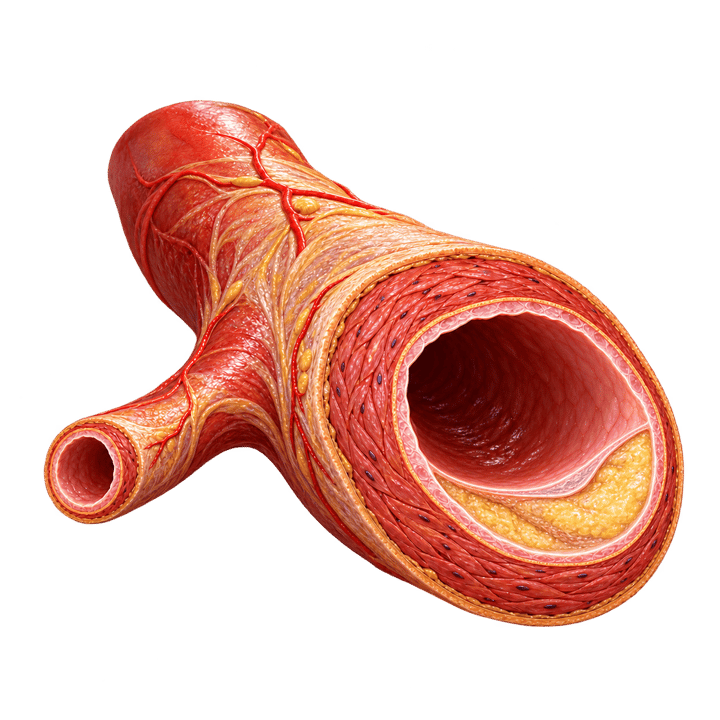
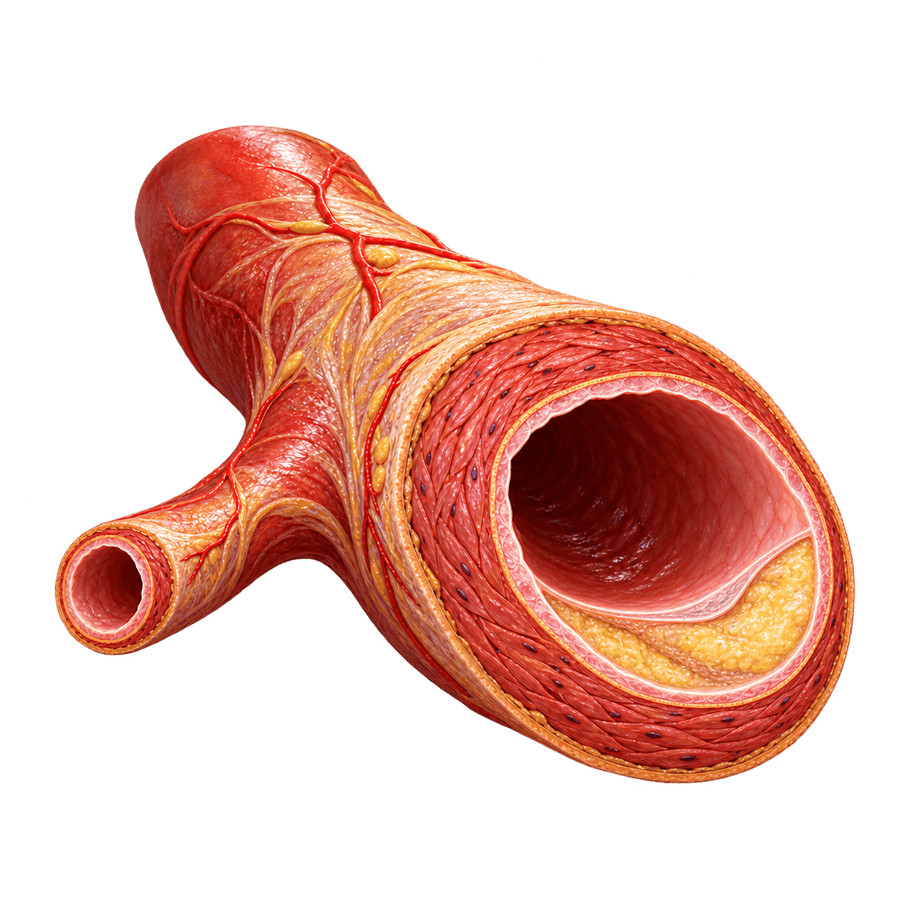
High LDL is like rust inside a pipe. Nothing shows on the outside until something gives.
Why it’s silent
Plaque builds inside the artery wall, and the guideline names the particles that carry LDL as an important cause of it. It says inherited high cholesterol may not show up as heart disease “for decades”, and that thickening of the neck arteries can be seen in children as young as 8 to 10. Abnormal cholesterol affects 20 to 25% of adults and children, and about a quarter of US adults have an LDL of 130 or more.
The rare signs you can see
People with familial hypercholesterolemia (FH), the inherited kind, sometimes get visible cholesterol deposits:
- fatty lumps on the tendons, most often the Achilles tendons and the tendons of the hands
- yellowish patches under the skin of the eyelids
- a gray ring at the edge of the cornea
Most people with FH have none of these, and up to 90% don’t know they have it. If you notice them, ask your doctor about FH and a lipid panel.
When very high triglycerides cause symptoms
Triglycerides “most often above 1,000 mg/dL” can inflame the pancreas. That usually starts as pain in the upper middle or upper left of the belly, which can spread to the back, gets worse after eating and becomes constant and severe, sometimes with nausea, vomiting and fever. Intense, constant belly pain needs urgent care.
What a heart attack can feel like
The CDC lists chest pain or discomfort, feeling weak, light-headed or faint, pain or discomfort in the jaw, neck or back, pain in one or both arms or shoulders, and shortness of breath.
If you notice these in yourself or someone else, call 911 right away. Faster care means less damage to the heart muscle, the CDC says.
6 sources
- CDC, About cholesterolcdc.gov
- Blumenthal RS, Morris PB, Gaudino M and others, 2026 ACC/AHA guideline on the management of dyslipidemia, JACC, 2026doi.org
- The same guideline, full text, Circulation, 2026api.iscpcardio.org
- MedlinePlus Genetics, Familial hypercholesterolemiamedlineplus.gov
- MedlinePlus, Acute pancreatitismedlineplus.gov
- CDC, Heart attack symptomscdc.gov