What triglyceride level is dangerous?
On this page
Fasting triglycerides of 150 mg/dL or more, or 175 after eating, are high. At 500 the risk of an inflamed pancreas (pancreatitis) starts to rise, and at 1000 it’s high, the 2026 US guideline says. See a doctor within days at 500 and the same week at 1000.
What we’d do
Under 150, you’re fine. From 150 to 499 it’s a food, drink and weight problem you can usually fix in weeks, starting with alcohol and sweet drinks. At 500, book a doctor within days. At 1000, see one this week. And if you ever have severe pain in your upper belly, go to the emergency room.
The lines
| Fasting triglycerides | mg/dL | mmol/L | What it means |
|---|---|---|---|
| Normal | under 150 | under 1.7 | nothing to do |
| High | 150 (175 after eating) | 1.7 (2.0) | treat with food, drink, exercise and weight. Persistent levels raise heart risk |
| Very high | 500 | 5.7 | the risk of pancreatitis starts to rise. No alcohol at all |
| Severe | 1000 | 11.3 | the risk of pancreatitis is high. A very low fat diet with no alcohol or added sugar, planned with a dietitian |
The high line has two numbers because a meal pushes triglycerides up for up to 6 hours, by as much as 26 points in 33,391 Danish adults. A test after lunch carries a little of the lunch.
A triglyceride number is like a smoke alarm with two settings. At 150 it chirps, and you fix it this month. At 500 it blares, and you deal with it now.
Why 500 and 1000
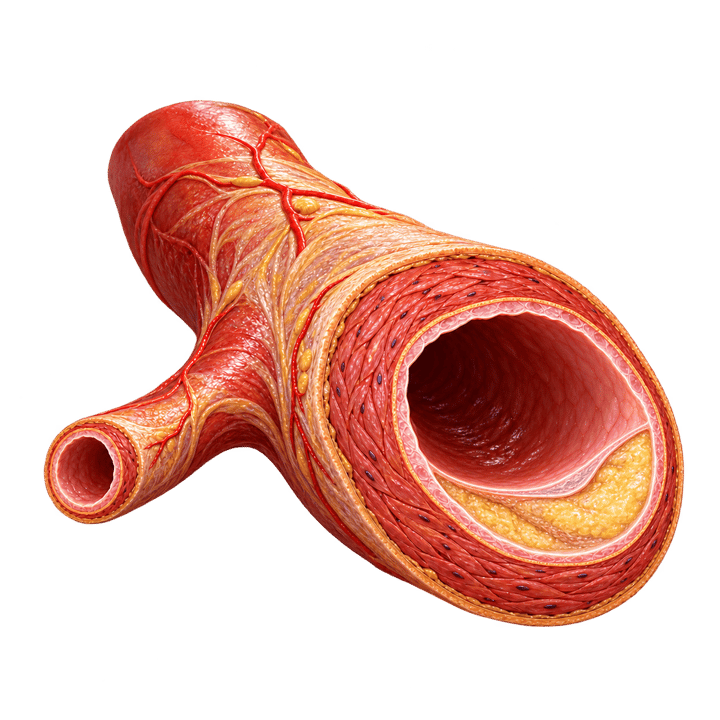
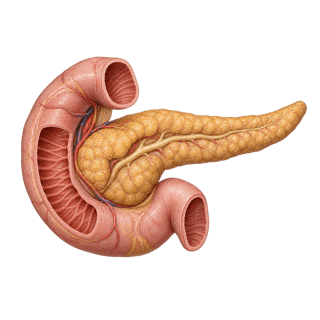
Below 500, the worry is your arteries over years. High triglycerides mean more triglyceride-rich particles in your blood, which the guideline links to heart attacks and strokes, and it says to watch non-HDL or ApoB instead of LDL when triglycerides are high. Above 500 there’s a second, faster worry, which is your pancreas. MedlinePlus lists triglycerides “most often above 1,000 mg/dL” among the causes of acute pancreatitis.
Pancreatitis usually starts as pain in the upper middle or upper left of the belly, which can spread to the back or below the left shoulder blade. It often gets worse after eating, becomes constant and severe, and can come with nausea, vomiting, fever and sweating. Intense, constant belly pain needs urgent care.
What brings them down
- Alcohol, sugar and refined carbs first. The guideline’s diet for 150 to 499 is low in all three and in saturated fat.
- Weight, if you carry extra. The guideline’s target is 5 to 10% of your weight, and triglycerides fell about 4 mg/dL per kg lost (about 1.8 per pound).
- Exercise, 150 minutes a week of moderate activity, plus upper and lower body strength work twice a week.
In people who respond strongly, these changes have cut triglycerides by more than 70%. Some causes need a doctor to find, like poorly controlled diabetes, kidney disease, an underactive thyroid, pregnancy and some medicines, among them oral estrogens, steroids, some blood pressure medicines and isotretinoin. Don’t stop a medicine on your own because of a triglyceride result. Ask whoever prescribed it.
The four week plan puts this in order, with the retest date.
4 sources
- Blumenthal RS, Morris PB, Gaudino M and others, 2026 ACC/AHA guideline on the management of dyslipidemia, JACC, 2026doi.org
- The same guideline, full text, Circulation, 2026api.iscpcardio.org
- MedlinePlus, Acute pancreatitismedlineplus.gov
- Langsted A, Freiberg JJ and Nordestgaard BG, Fasting and nonfasting lipid levels: influence of normal food intake on lipids, lipoproteins, apolipoproteins, and cardiovascular risk prediction, Circulation, 2008pubmed.ncbi.nlm.nih.gov